
Ships · Great Lakes / Seaway
Tamarack: cement, not concrete
A new-generation cement carrier: four dry-cargo holds, enclosed mechanical and pneumatic handling, and diesel-electric propulsion. This interesting ship moves powder — not liquid, gas or ready-mixed concrete.
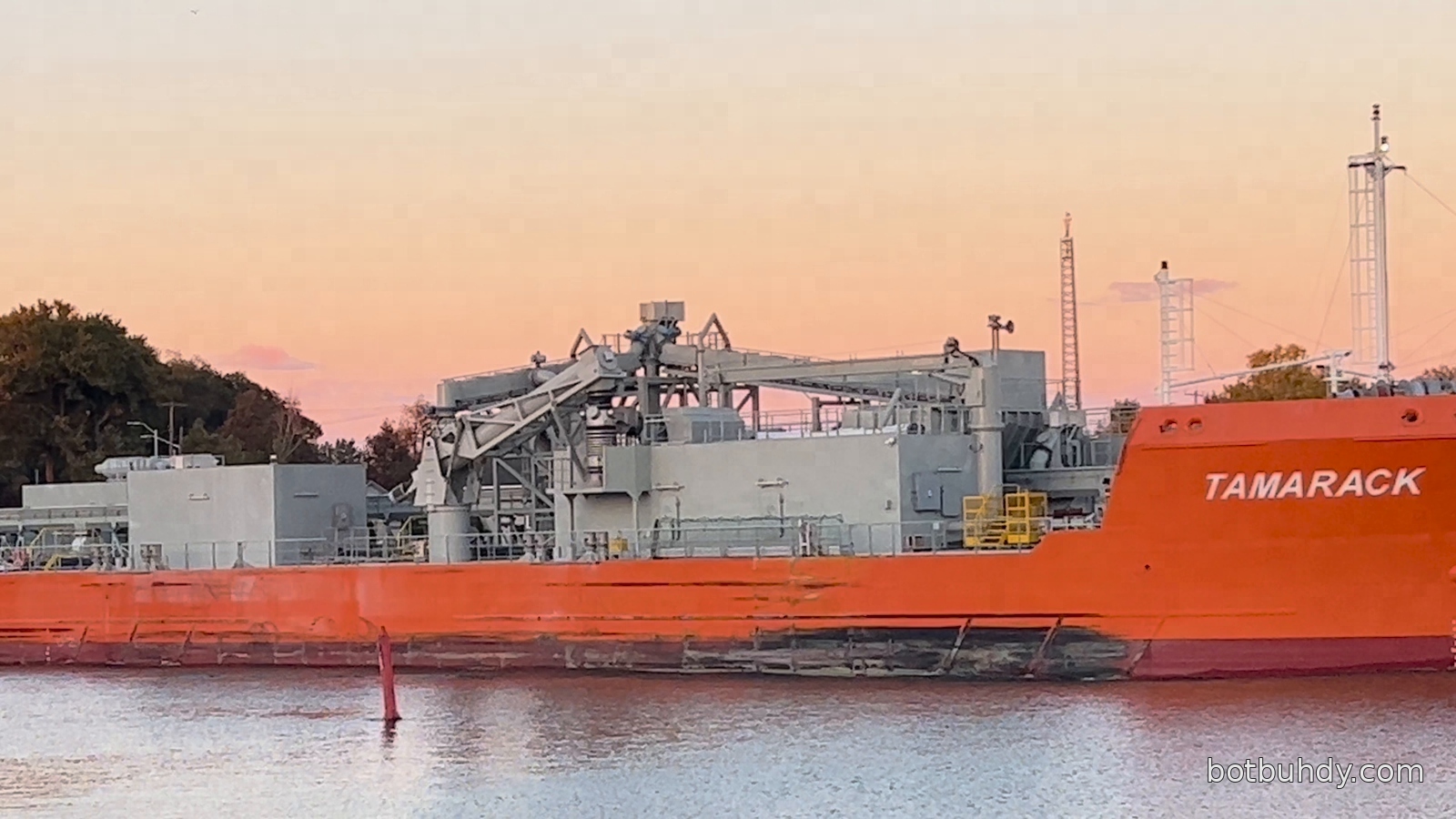
A delivery ship for the material behind concrete
MV Tamarack is a Canadian-flagged, self-discharging cement carrier, built in 2025. She is owned by Eureka Shipping, the CSL–SMT Shipping joint venture, and managed by CSL’s Canadian division, Canada Steamship Lines. Her permanent identifier is IMO 1037153; AIS identifies her as MMSI 316041965.
Cement is a dry, finely ground binder. It is mixed with water and aggregates ashore to make concrete. Tamarack carries that powder in bulk, linking the cement supply chain with receiving terminals across the Great Lakes and St. Lawrence Seaway. Amrize announced a planned 15-year service for the vessel as part of its cement distribution network. One new ship replaces two older vessels.
Official fleet page · CSL · Owner’s particulars · Eureka · AIS tracking · VesselFinder
At a glance
The shipyard delivered Tamarack on July 23, 2025. Its delivery announcement gives 10,700 m³ across four holds; CSL’s fleet page lists 10,856 m³. Eureka lists a 6.43 m draft without the freshwater qualifier used by CSL. These published figures are reported with their sources rather than treated as identical. Deadweight includes cargo, fuel, water and stores; gross and net tonnage are not weights in tonnes.
Tamarack — the full video
The complete video, with its original sound. Nothing starts automatically: choose play to open the player, then use the controls for volume, seeking and full screen.
Open video file ↗
How a cement carrier works
The confirmed Tamarack features are four cement holds, mechanical loading, and mechanical or pneumatic discharge. The steps below explain the general principles of enclosed cement handling; they are not a claim that we have inspected her internal machinery or identified its manufacturer.
1 · Keep the powder dry, inside four holds
The hull contains four dedicated cargo compartments. Unlike a tank of liquid, a hold contains a mass of dry powder. Keeping moisture out protects the cement, while controlled loading and ballast management keep the ship within stability and structural limits. Enclosed transfer equipment also helps contain dust.
A simplified sequence, not Tamarack’s deck plan. The footage does not show inside the holds.
2 · Load from the shore system
At a compatible cement terminal, the shore supply connects to the ship’s loading system. Mechanical conveyors transfer the dry material into the holds through enclosed routes. In cement handling generally, a screw conveyor works like a rotating auger inside a casing: the turning flight pushes powder along without exposing it on an open belt.
Eureka explicitly confirms mechanical loading and marks pneumatic loading “n/a”; CSL’s fleet table lists both. Mechanical loading is the common confirmed capability used in this explanation.
3 · Unload mechanically — or use air
Mechanical discharge moves material with powered, enclosed conveying equipment to a compatible receiving system ashore. Pneumatic discharge uses an air stream to carry powder through a closed line to a receiving silo, where the air and material must be separated and dust controlled. Air carries the cement; this is not the same as pumping a liquid cargo.
Self-discharging means the cargo-handling machinery comes with the ship. It does not mean she can unload anywhere: the receiver still needs the right connections, storage and dust-control arrangements. We have not assigned a discharge rate or a precise conveyor layout to Tamarack without a verified specification.
4 · Turn electricity into movement
The shipyard describes diesel-electric propulsion with four generator sets. The generators supply electrical power for propulsion and shipboard systems. Two rudder propellers can turn through 360 degrees, directing thrust where it is needed; a bow thruster adds sideways force at the forward end. Together, they help a compact, broad ship manoeuvre at terminals and through constrained waterways.
5 · Use less energy — without pretending the engines disappear
Tamarack is HVO-biofuel compatible and prepared for shore power. She also has noise insulation, silencers and energy-saving cargo systems. Compatibility is not proof that HVO was used in this footage. Shore power can reduce onboard engine use when the necessary shore infrastructure is available; this is not a battery-only or zero-emission-at-sea ship.
At dusk — and in daylight
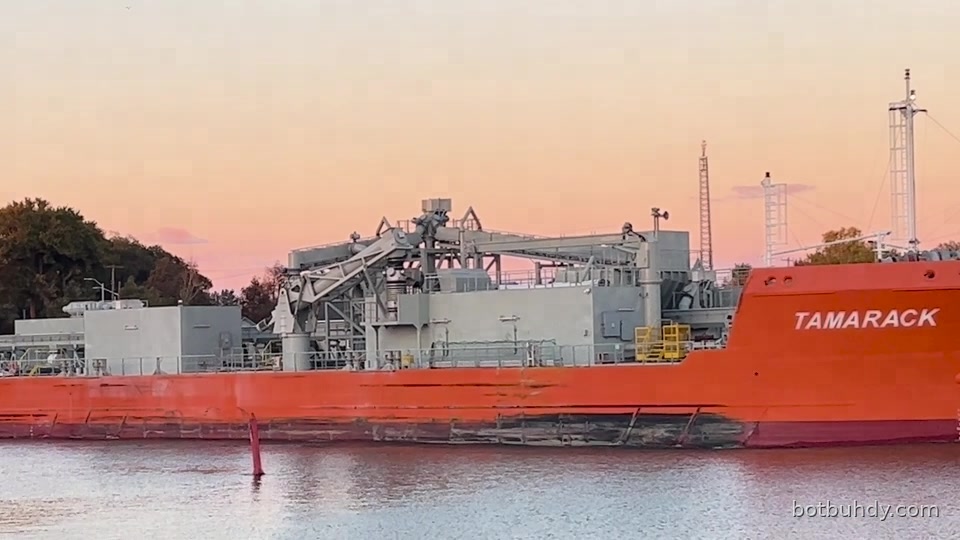
Four frames from the full video, followed by two separately licensed daylight photographs. Open any image for a closer look; the credit and licence remain in the viewer caption.
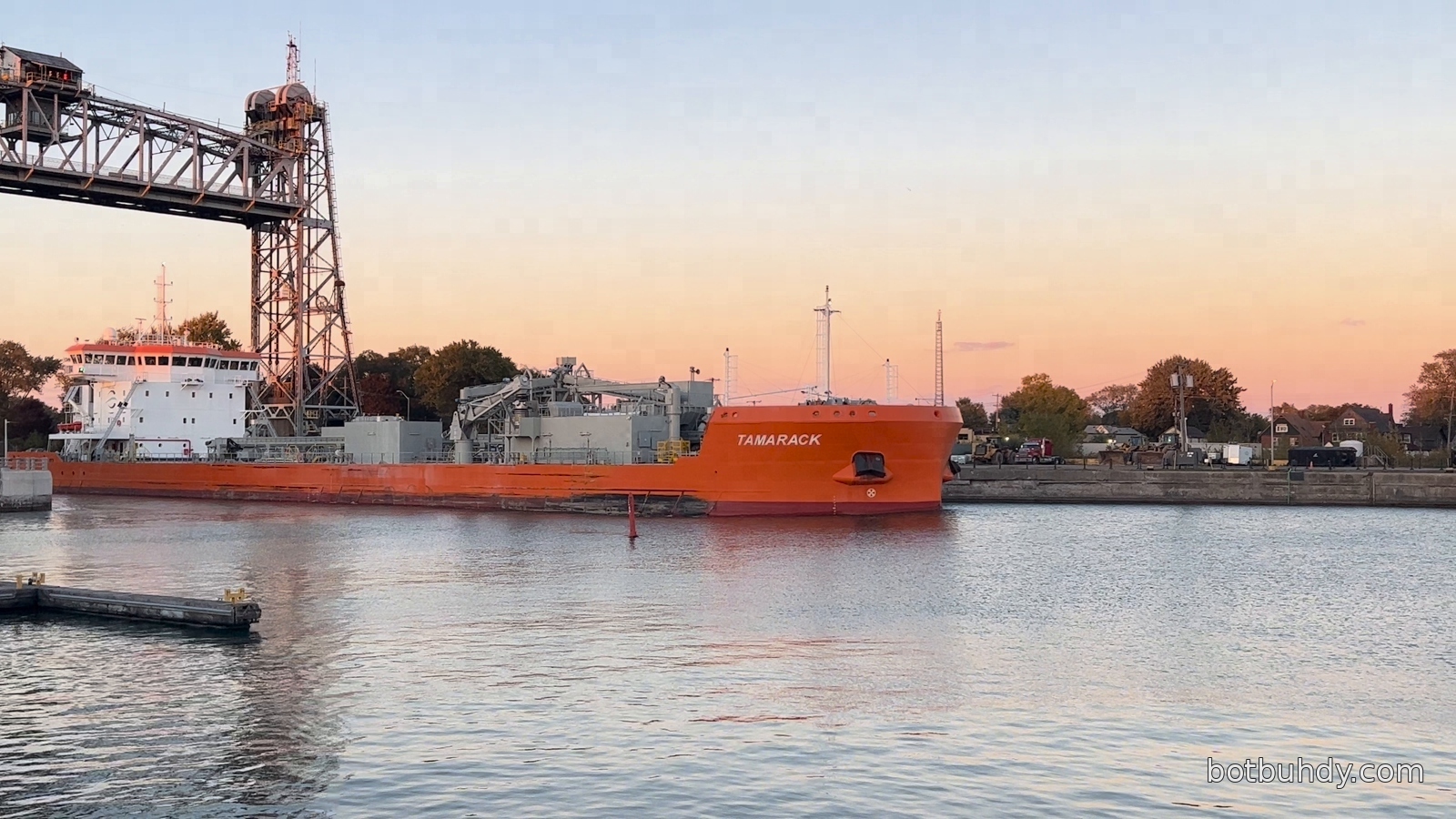
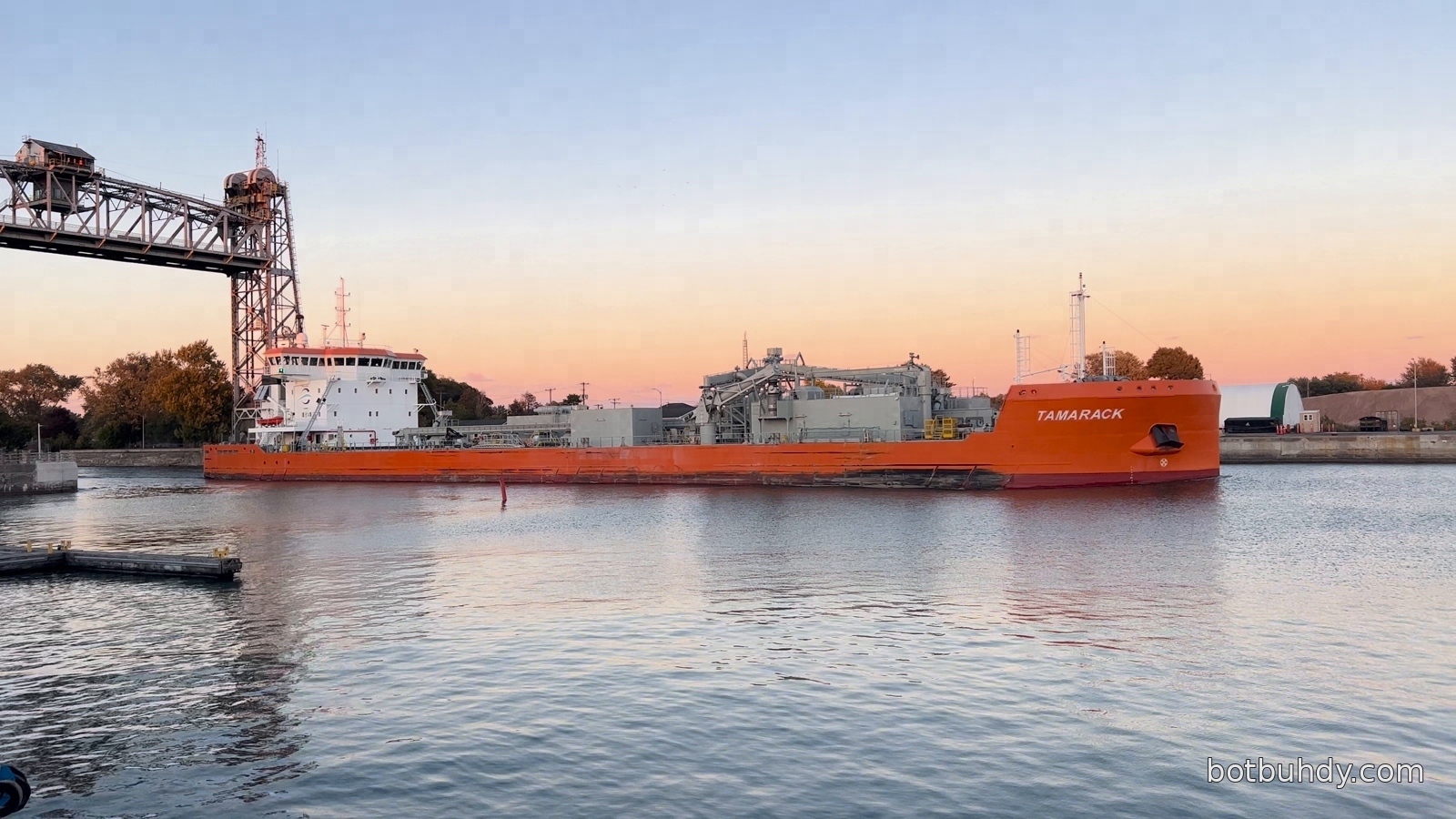
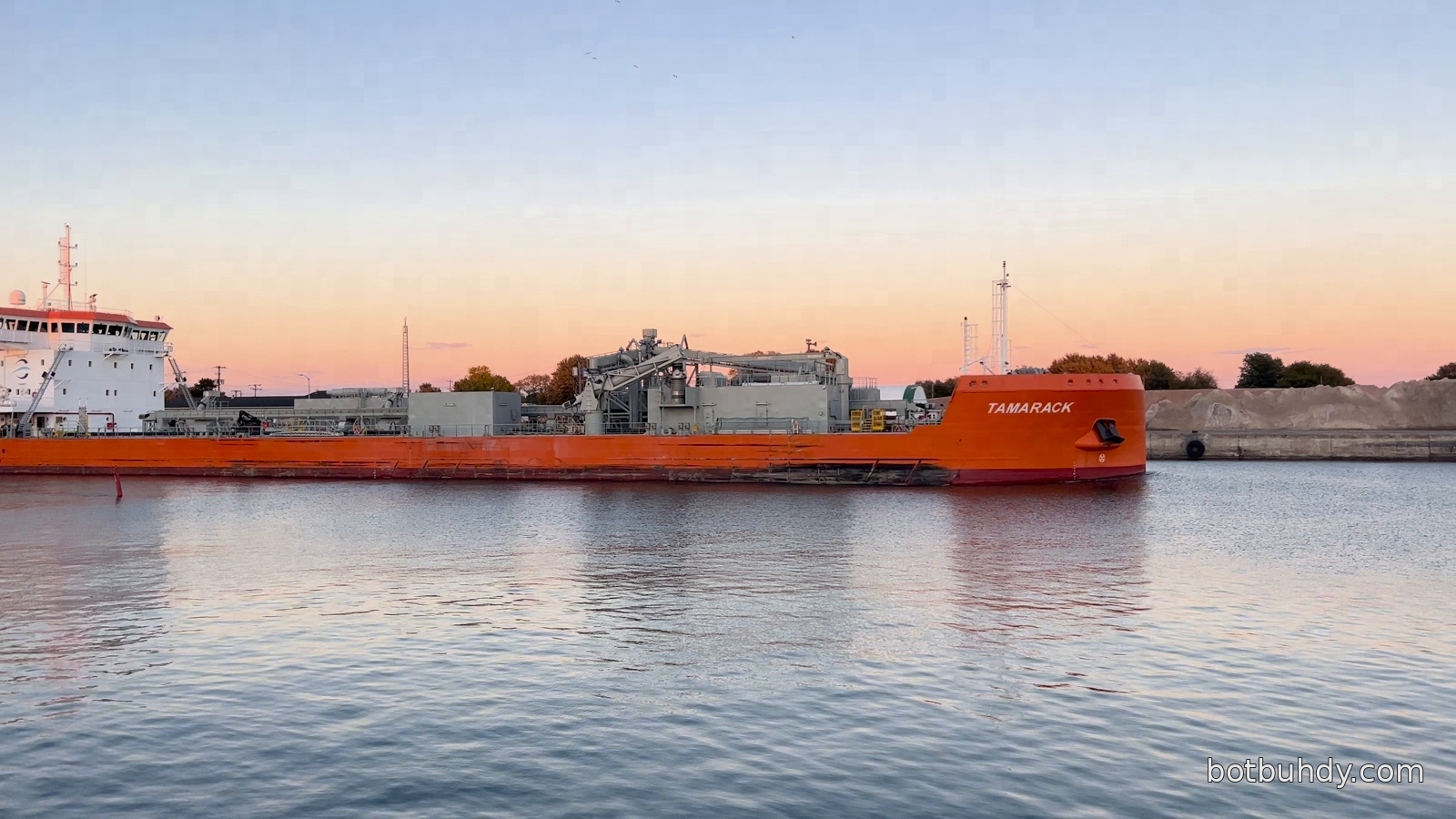
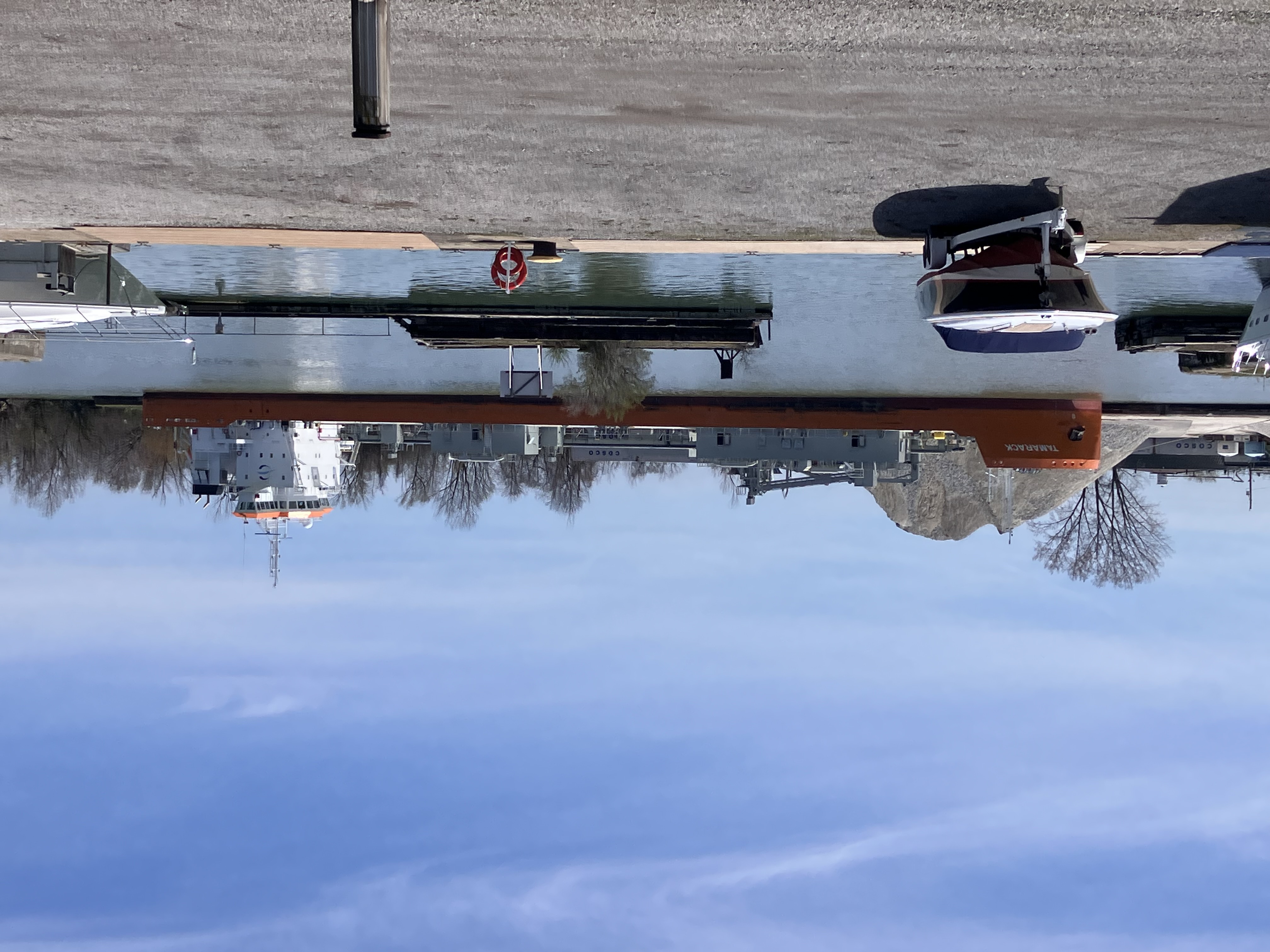
Photo: Gogerr / Wikimedia Commons · CC BY-SA 4.0 · GPS metadata removed; image otherwise unchanged.
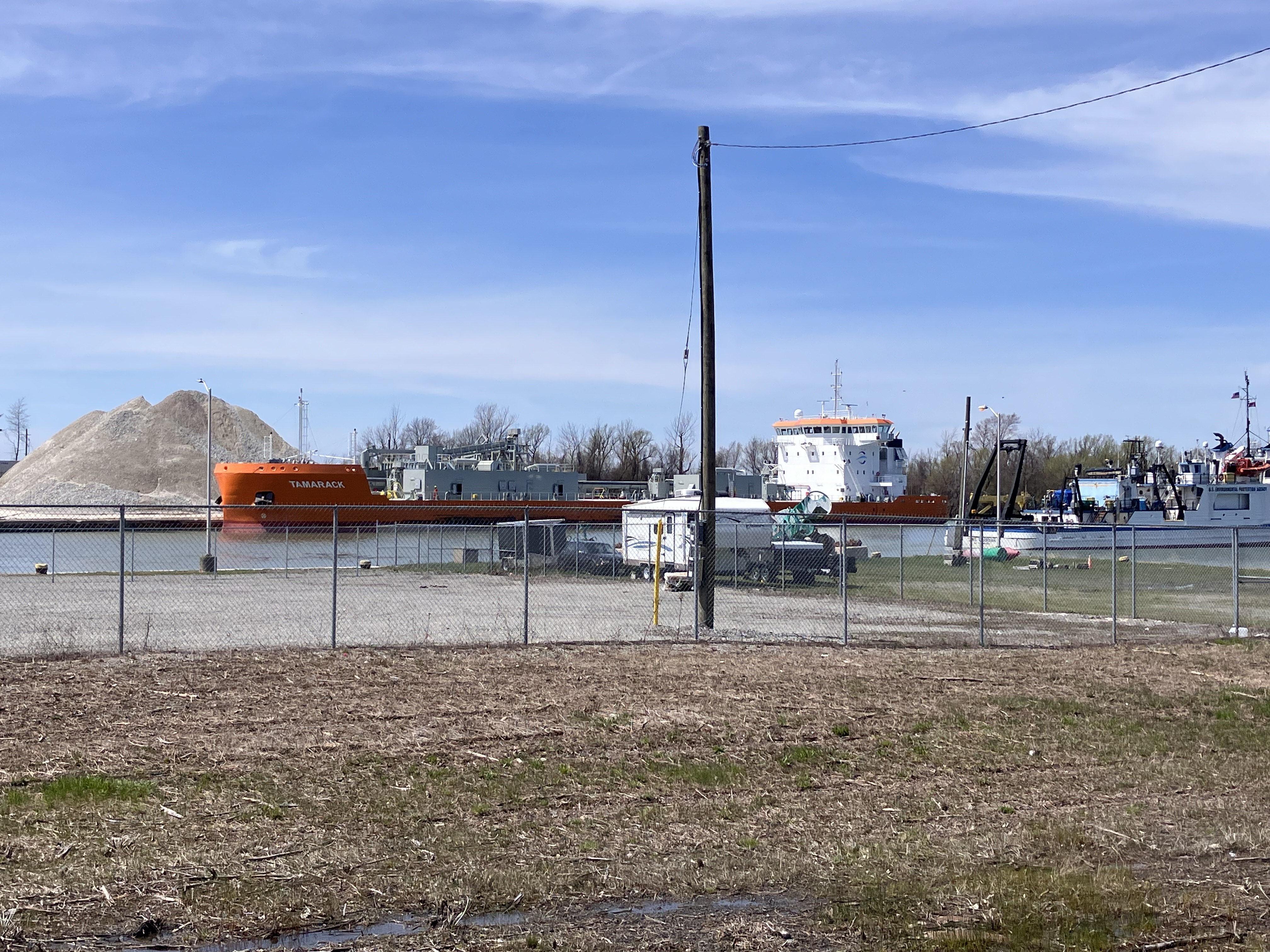
Photo: Gogerr / Wikimedia Commons · CC BY-SA 4.0 · GPS metadata removed; image otherwise unchanged.
Sources
- CSL — Tamarack fleet page: ownership, operating region, dimensions, deadweight, hold capacity, freshwater draft and system types.
- Eureka Shipping — M/V Tamarack: Canadian flag, build year and yard, gross/net tonnage, and loading/discharge capabilities.
- Holland Shipyards Group — delivery announcement: July 23, 2025 delivery, four holds, four generator sets, twin 360-degree propellers, bow thruster and efficiency features.
- CSL — new cement carrier enters service: Eureka ownership and management by Canada Steamship Lines.
- Amrize — Tamarack distribution-network announcement: cement-delivery role, planned 15-year service and replacement of two older vessels.
- MacGregor — cement-handling systems: general enclosed mechanical/screw-conveyor and pneumatic principles only; not evidence that this supplier’s equipment is installed on Tamarack.
- VesselFinder — Tamarack, IMO 1037153: AIS identity and tracking link; positions and destinations change.
Technical sources checked November 6, 2026. Published capacity and loading-system differences are identified above. Photograph sources and CC BY-SA 4.0 licence links appear beside each Commons image. Not affiliated with the operators or equipment suppliers.