
Ships · Great Lakes / Seaway
Rt. Hon. Paul J. Martin: the red self-unloader
A closer look at CSL’s Great Lakes bulk carrier: five cargo holds, a 79-metre unloading boom, and a long red hull on the Seaway.
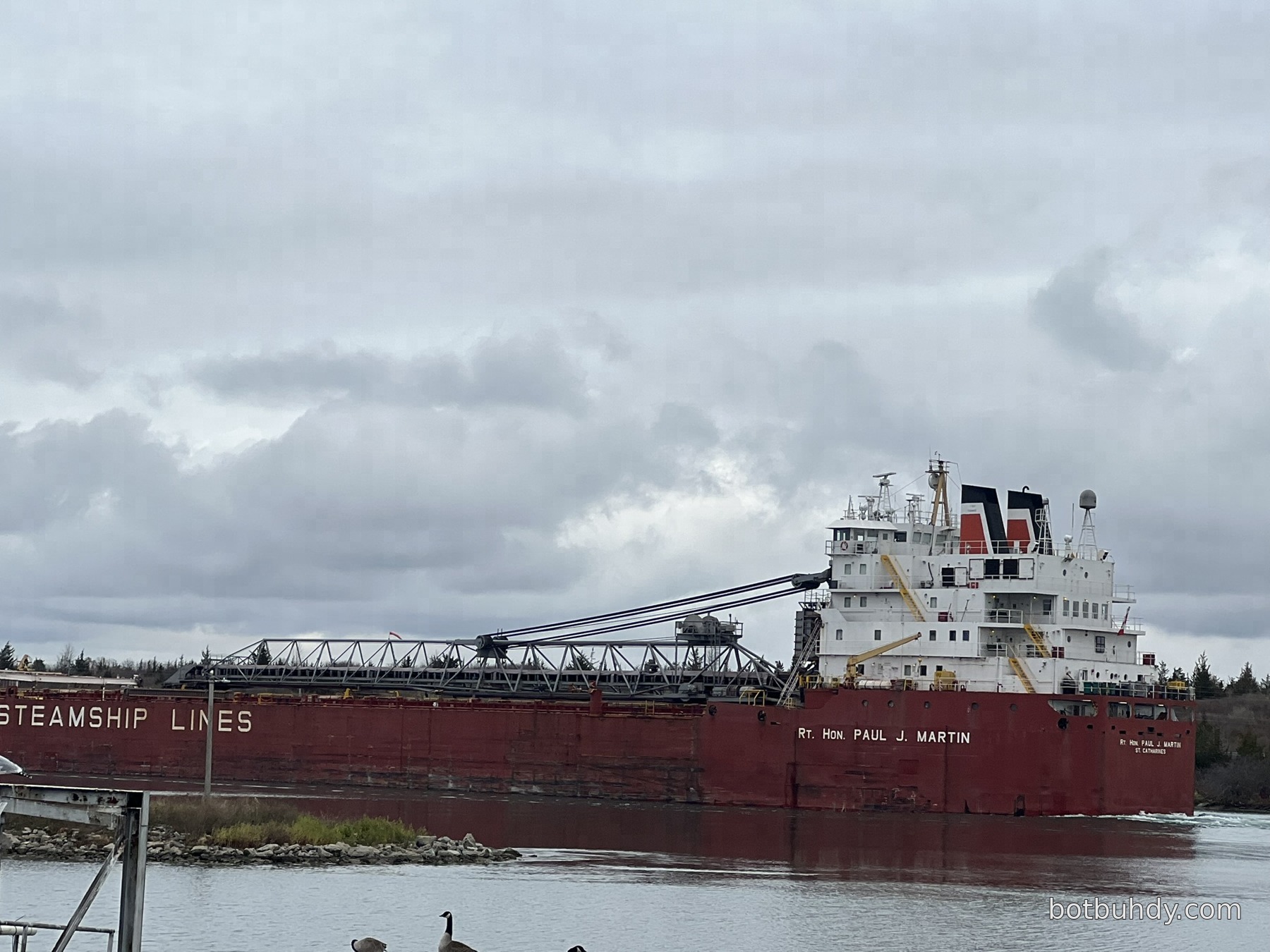
Rt. Hon. Paul J. Martin
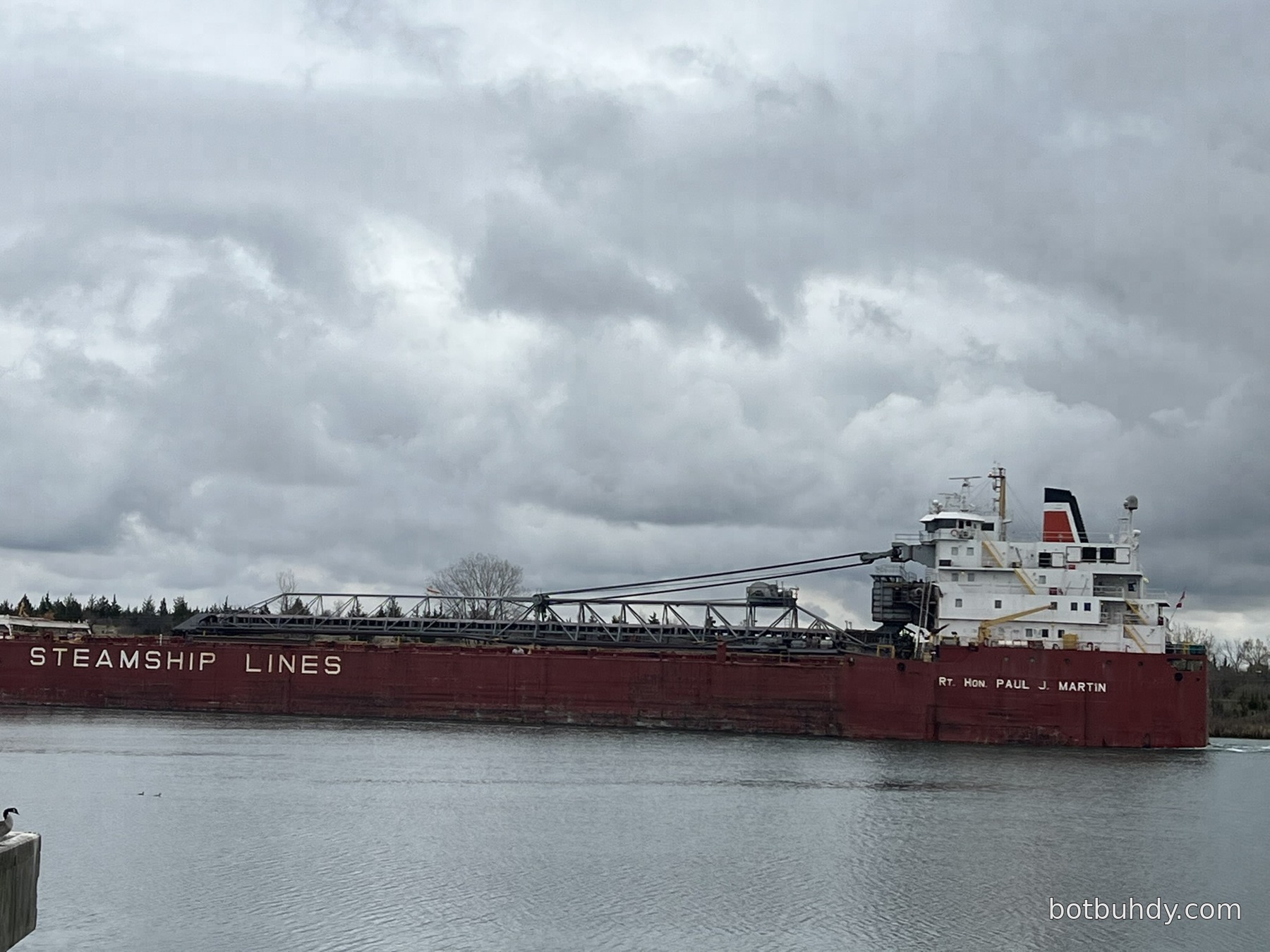
The full name is Rt. Hon. Paul J. Martin — “Right Honourable” Paul J. Martin. This red-hulled ship is wholly owned and operated by CSL and works in its Great Lakes and St. Lawrence Seaway self-unloading fleet.
She is a self-unloading bulk carrier: dry cargo travels in holds below deck, and a built-in conveyor system can deliver it ashore without a shore crane digging it out. This is the Paul J. Martin, not the different Paul E. Martin in CSL’s ocean fleet.
A few useful numbers
CSL’s own page disagrees on conversion dates: the technical table says 2000, while the narrative says 2003. We leave that unresolved rather than invent a single date. The stated hold volume is an operator specification, not the cargo quantity in these photos.
How the red self-unloader works
CSL describes hoppered holds with 35-degree slopes and remotely operated gates. Cargo drops onto two tunnel conveyors, then passes across the ship on cross conveyors. A loop-belt elevator lifts it onto the unloading boom.
The 79 m boom has a dust covering and fixed spill tray. CSL lists designed discharge rates of 5,200 tonnes/hour for ore and 4,000 tonnes/hour for coal. These are cargo-dependent equipment ratings, not evidence of what she was carrying in these views.
The same basic idea appears on Algoma Bear: the ship brings its own route from hold to shore. Compare that with the tankers’ pumps and enclosed cargo tanks.
The red hull on the Seaway
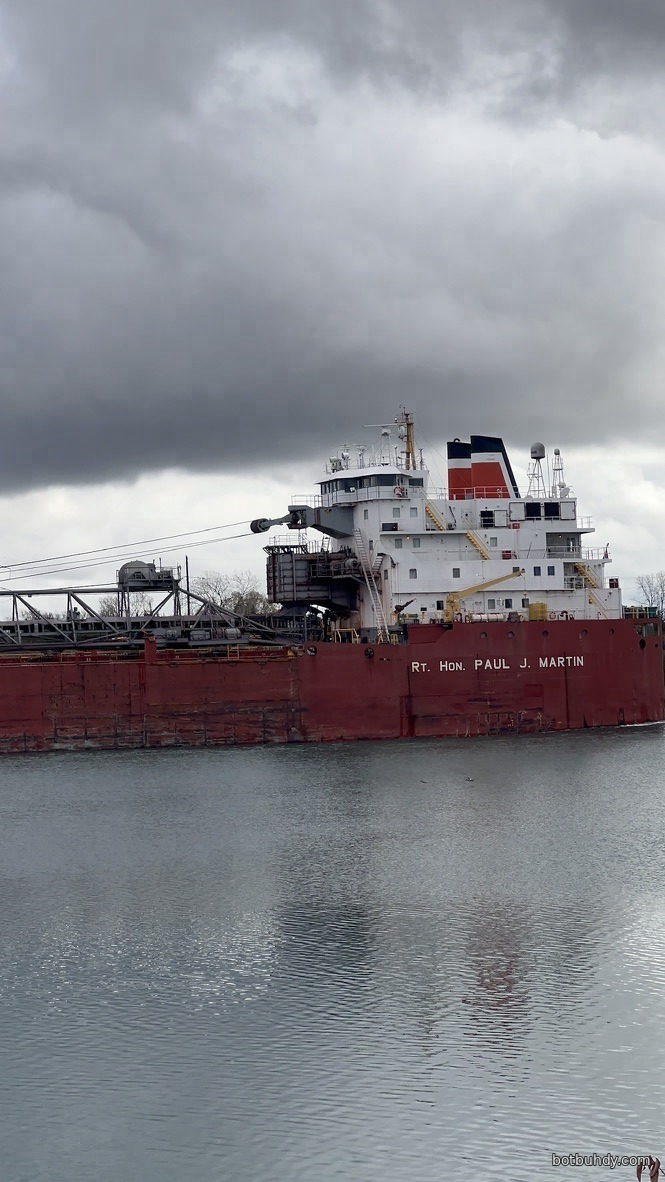
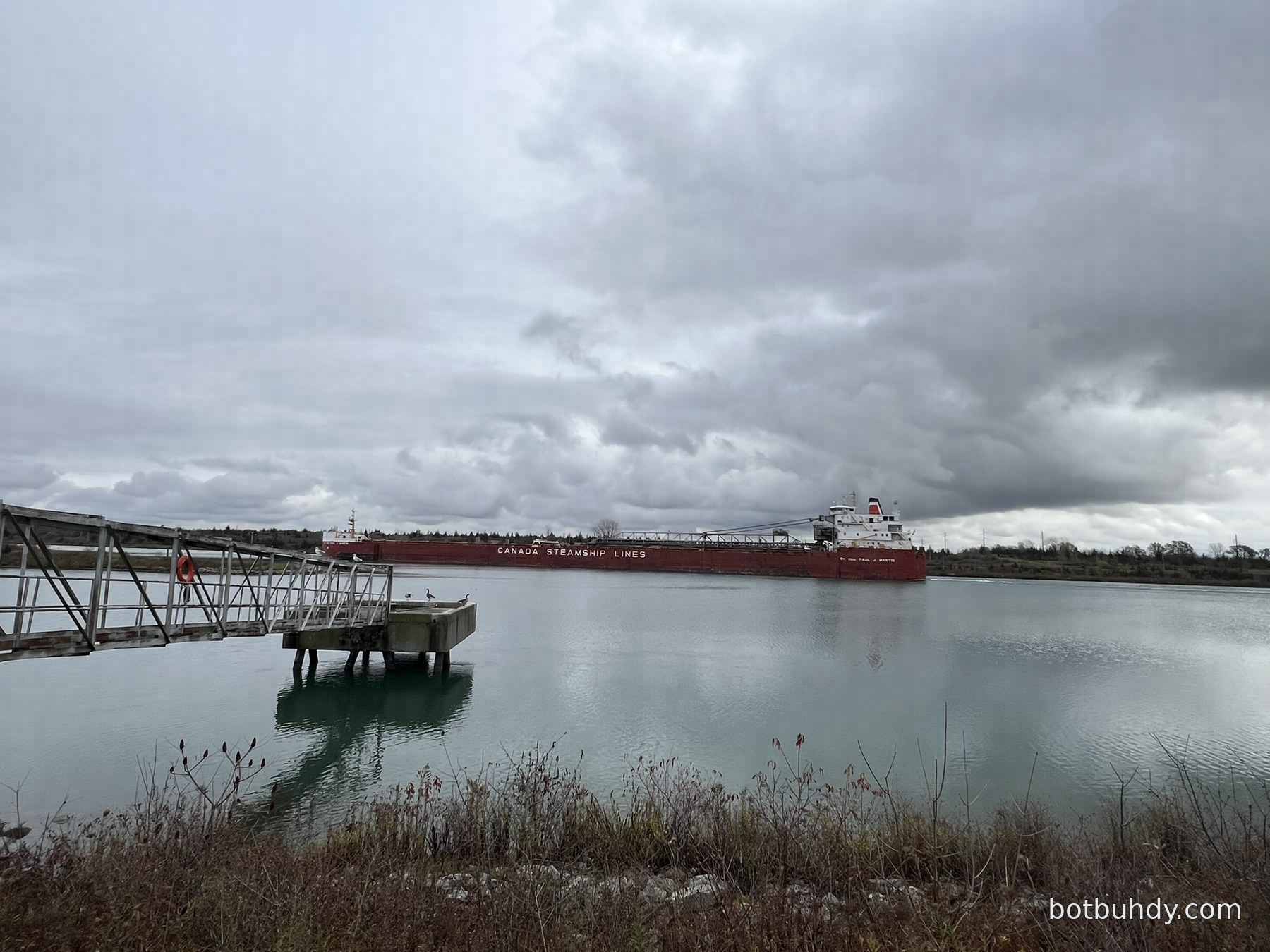
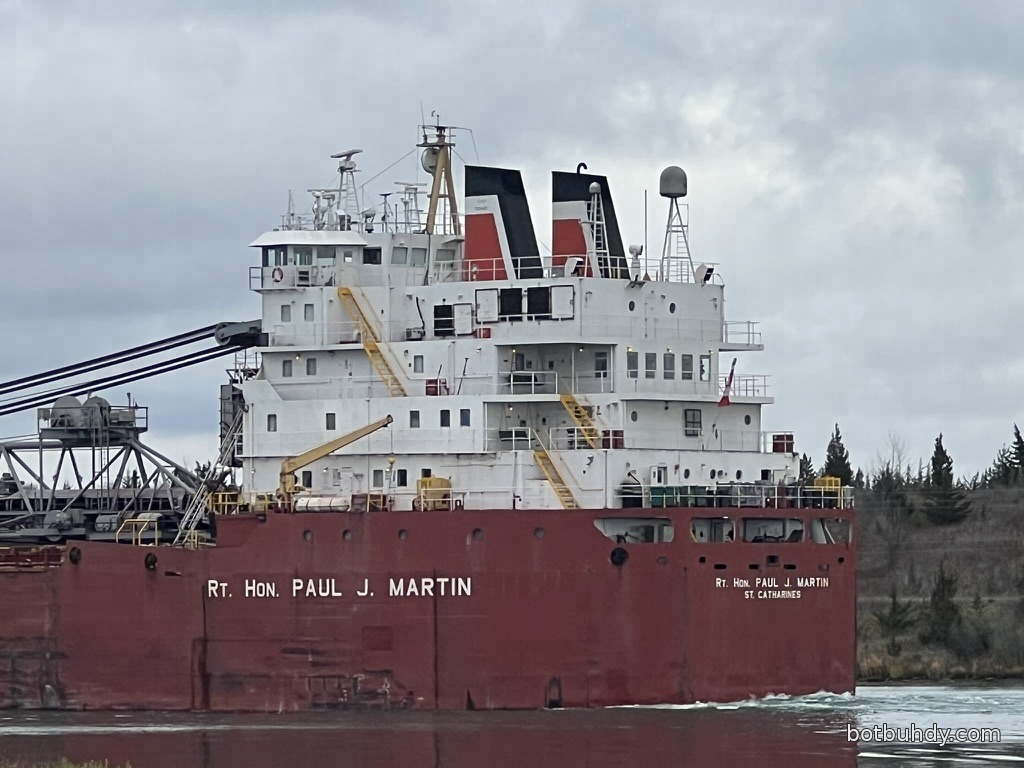
Full-length passage video
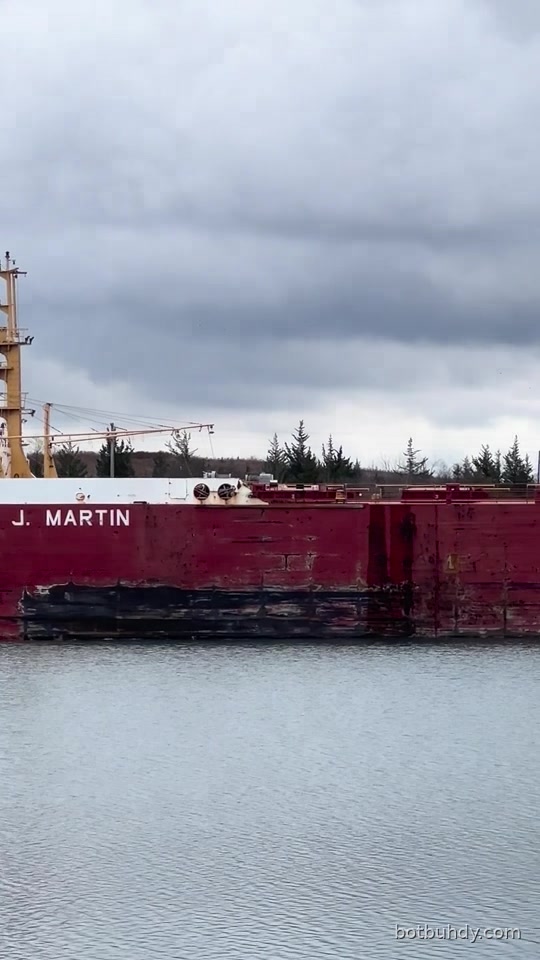
The full passage, with original sound — not an autoplay loop. Click to play, pause, change the volume or go full screen.
Open video file ↗
Sources
- CSL — Rt. Hon. Paul J. Martin — ownership, dimensions, holds, conveyors, boom and discharge rates.
- BoatNerd — Rt. Hon. Paul J. Martin — IMO 7324405 and vessel identity.
Public specifications checked November 6, 2026. Capacities depend on draft and loading conditions. Not affiliated with the operators.