
Ships · Great Lakes / Seaway
Algoma Bear: grain, holds & the big boom
Watch Algoma Bear loading grain from shoreside silos, then explore her five cargo holds, fourteen hatches and separate self-unloading conveyor system.
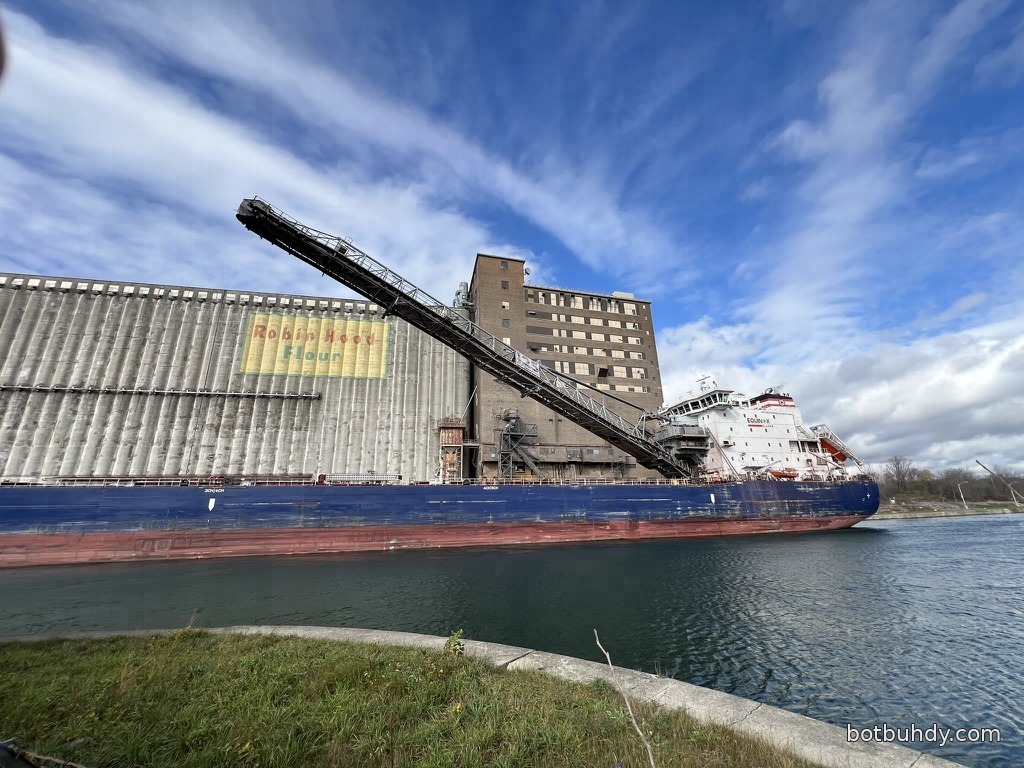
Algoma Bear — a ship with its own unloading system
Algoma Bear is a Canadian-flagged, Seaway-max self-unloading bulk carrier, owned and operated by Algoma Central Corporation and built in 2024. The long blue hull is a travelling storehouse for loose dry cargo, not containers. Her permanent identifier is IMO 9619309.
Here Algoma Bear is loading grain from shoreside silos at a Great Lakes mill. The featured video shows grain entering an open cargo hold; the ship’s large boom is a separate system used to unload cargo.
At a glance
Algoma’s April 2024 specification sheet lists 35,840 t cargo deadweight at midsummer draft, versus 29,749 t at the shallower Seaway draft, assuming about 610 t of consumables. These are not interchangeable capacities or a claim about this voyage’s load.
Inside the long hull
The storage compartments are called cargo holds. Algoma Bear has five, separated along the hull. Fourteen covered openings — hatches — provide access from the weather deck. There are more hatches than holds: a hatch is an opening, not a separate compartment.
Simplified hold sequence, not a deck plan. The holds and the equipment below them are not visible in the photos.
Loading grain: shore → ship
The featured video shows grain being loaded from the shoreside silos through a loading spout into an open hold. In this kind of operation, the spout position and loading sequence distribute the weight. The crew monitors trim, stability and structural limits. Hatches are secured for the voyage. The ship’s unloading boom is not normally the equipment that fills her holds.
Discharging: ship → shore
Algoma’s sheet describes a two-belt gravity system with a loop-belt elevator. Gates beneath the cargo let material feed onto the tunnel belts. The elevator lifts it to deck level, then the long boom carries it over the side to a receiving point ashore. The boom can slew to either side and rise to suit the receiving arrangement.
That is what self-unloading means: the discharge machinery travels with the ship. This sighting shows the opposite flow: shoreside equipment loading grain into the holds, not the ship’s boom discharging it ashore.
Short coming soon
coming soon
Algoma Bear
A dedicated vertical Short will go here. For now, explore the photos and silent clips below — this is a placeholder, not a playable video.
Alongside the silos
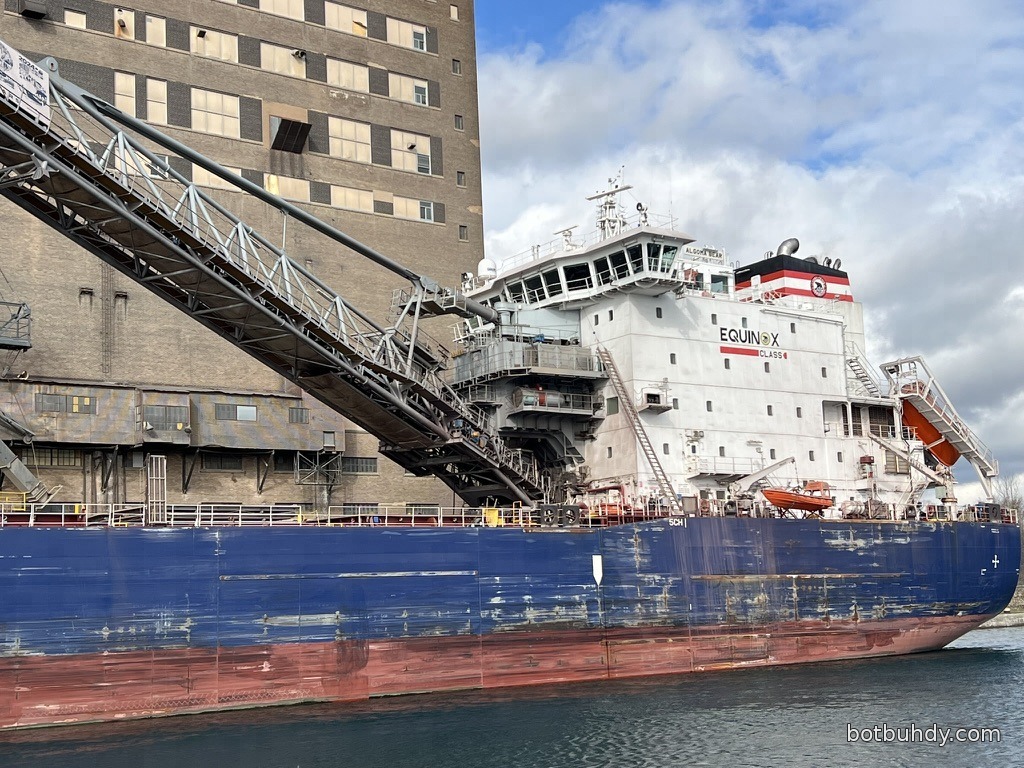
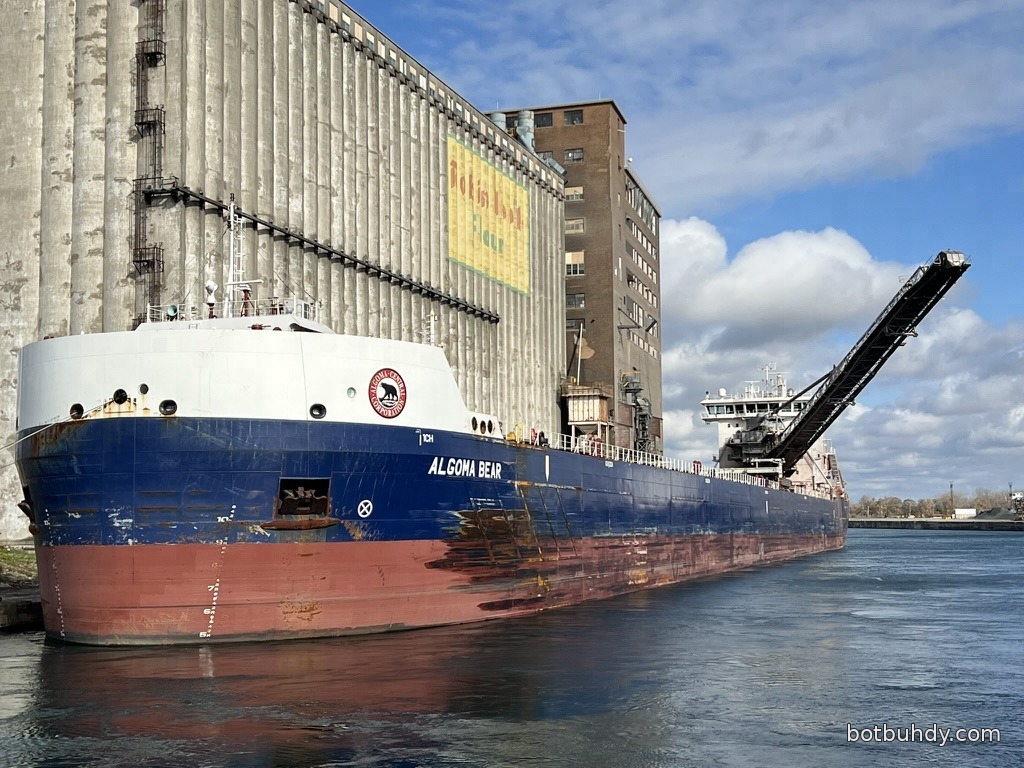
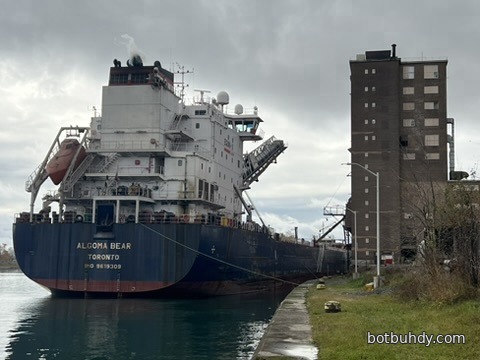
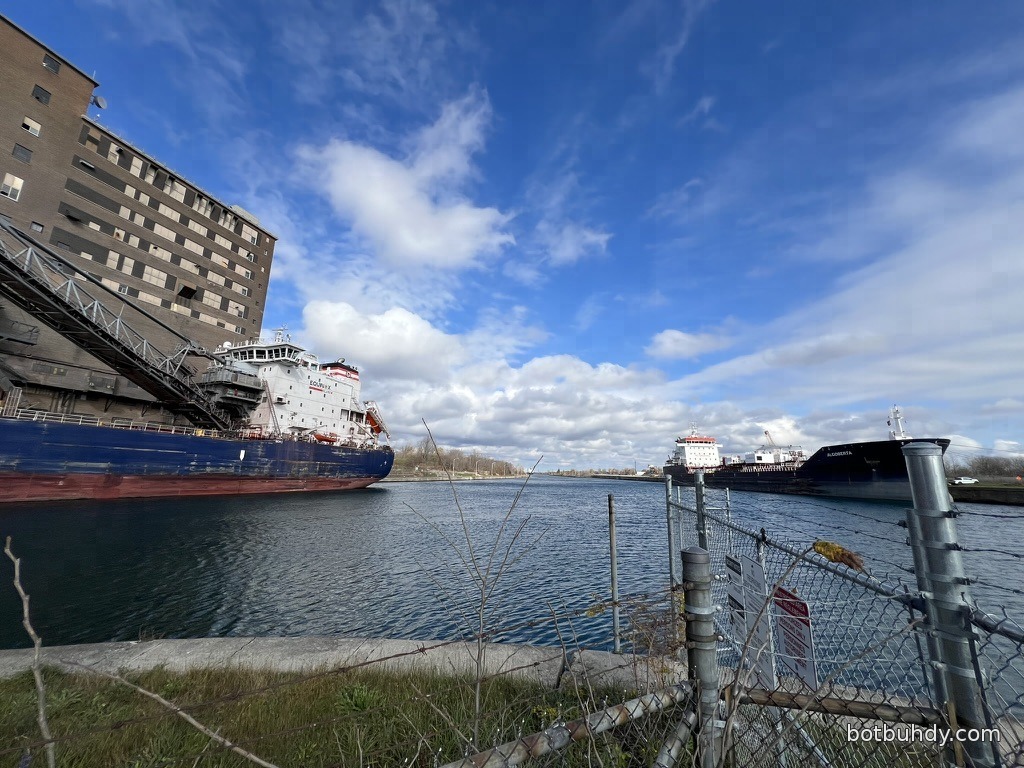
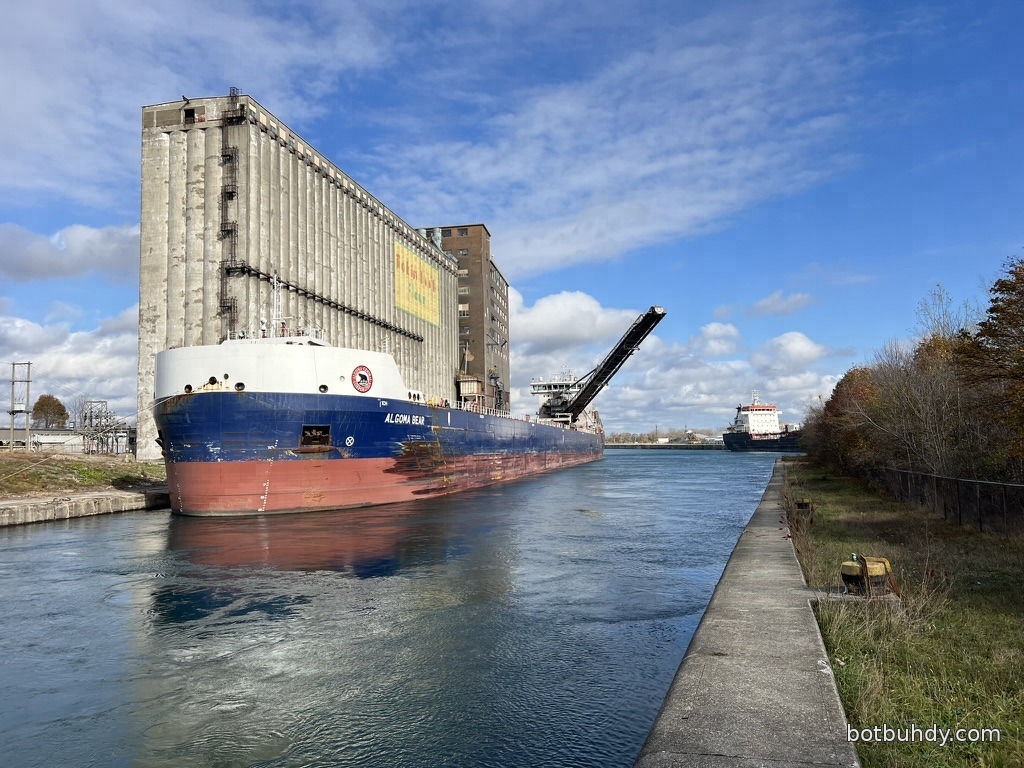
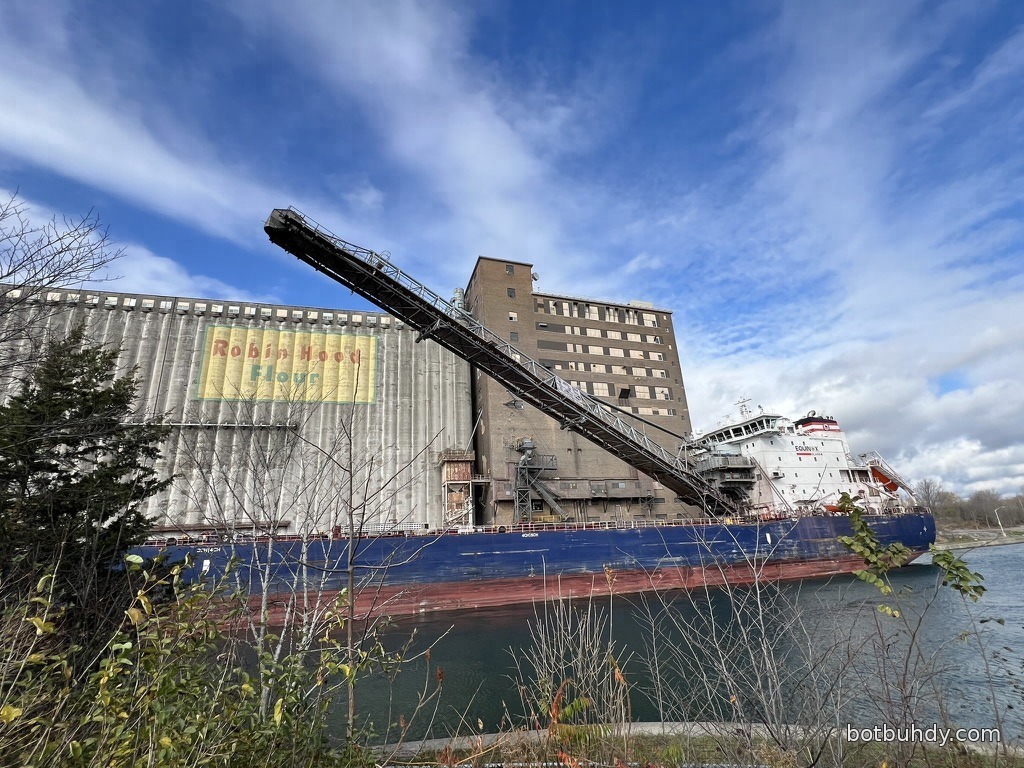
Grain loading & alongside clips
Watch the loading operation, then compare it with the ship’s separate self-unloading boom. The featured video plays only when you choose it.
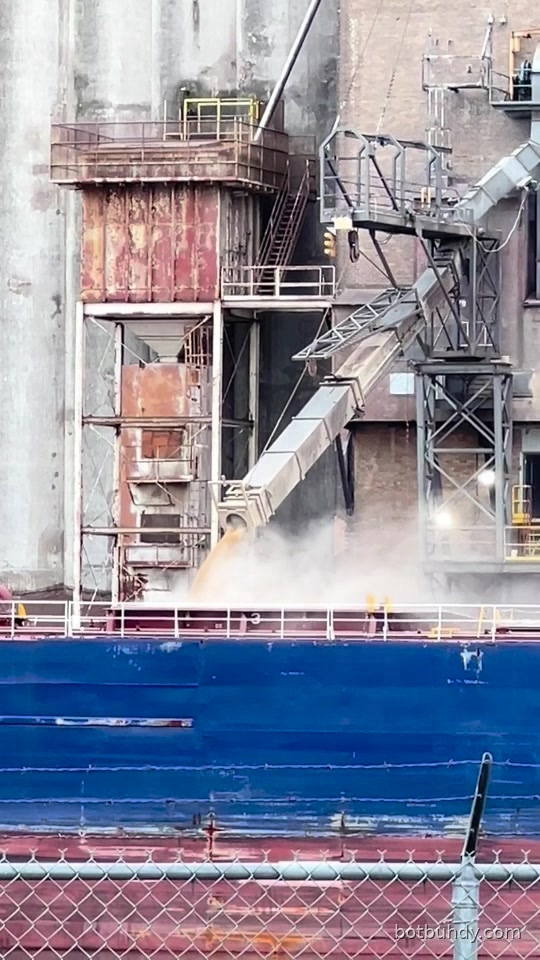
Open video file ↗
Short silent views
Short, silent web loops. They load near the screen and pause out of view. Use the controls to pause or expand; reduced-motion settings are respected.
Sources
- Algoma — Algoma Bear — build year, operator fleet and Seaway-max classification.
- Algoma — Algoma Bear specification sheet (PDF) — dimensions, hold/hatch capacities and self-unloading system.
- Deltamarin — Algoma Bear — shipowner, design and IMO number.
- CSL — Self-unloaders — general explanation of self-unloading bulk carriers.
Public specifications checked November 6, 2026. Capacities depend on draft and loading conditions. Not affiliated with the operators.