The third limb of Patanjali's eight-limbed path. A steady, comfortable body is the foundation for all higher practice.
In Patanjali's Yoga Sutras, asana is just the third of eight limbs — and it receives only three sutras out of 196. The original definition: "Sthira sukham asanam" — "A posture that is steady and comfortable." That's it.
Modern yoga studios have inverted this. The elaborate physical practice came centuries later with Hatha Yoga texts like the Hatha Yoga Pradipika (15th century). These postures have real value — they strengthen, open, and balance the body — but they are preparation, not the destination.
The real purpose of asana: To make the body a stable, painless seat so the mind can turn inward without distraction. A body that aches, fidgets, or collapses cannot sustain deep meditation.
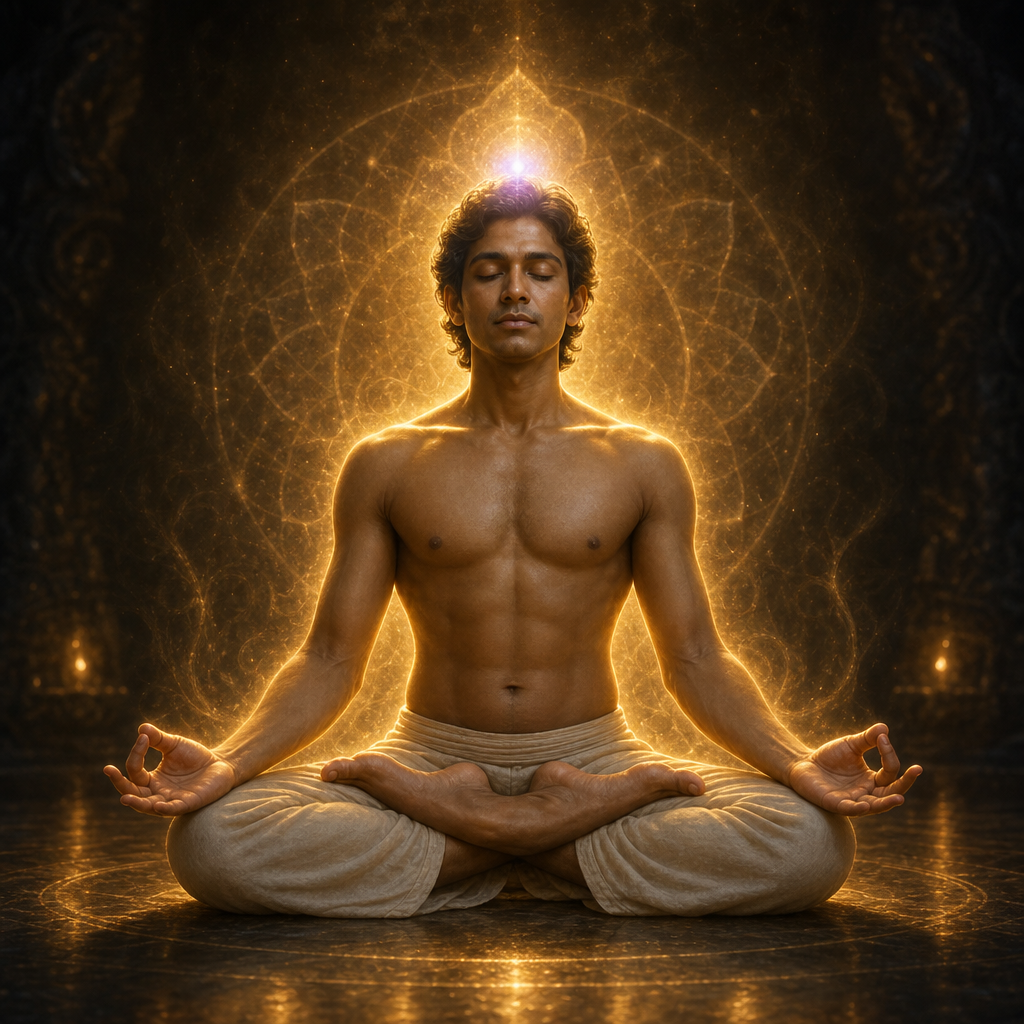
🪷 Connection to Kriya: The seated meditation postures (Siddhasana, Padmasana, Sukhasana, Vajrasana) are especially critical for Kriya Yoga. Yogananda emphasized that the spine must be erect and the body absolutely still for the energy to move freely through the chakras during Kriya practice. → Learn about Kriya Yoga
Standing poses build strength, balance, and groundedness. They develop the legs, open the hips, and cultivate the foundation of embodied presence.
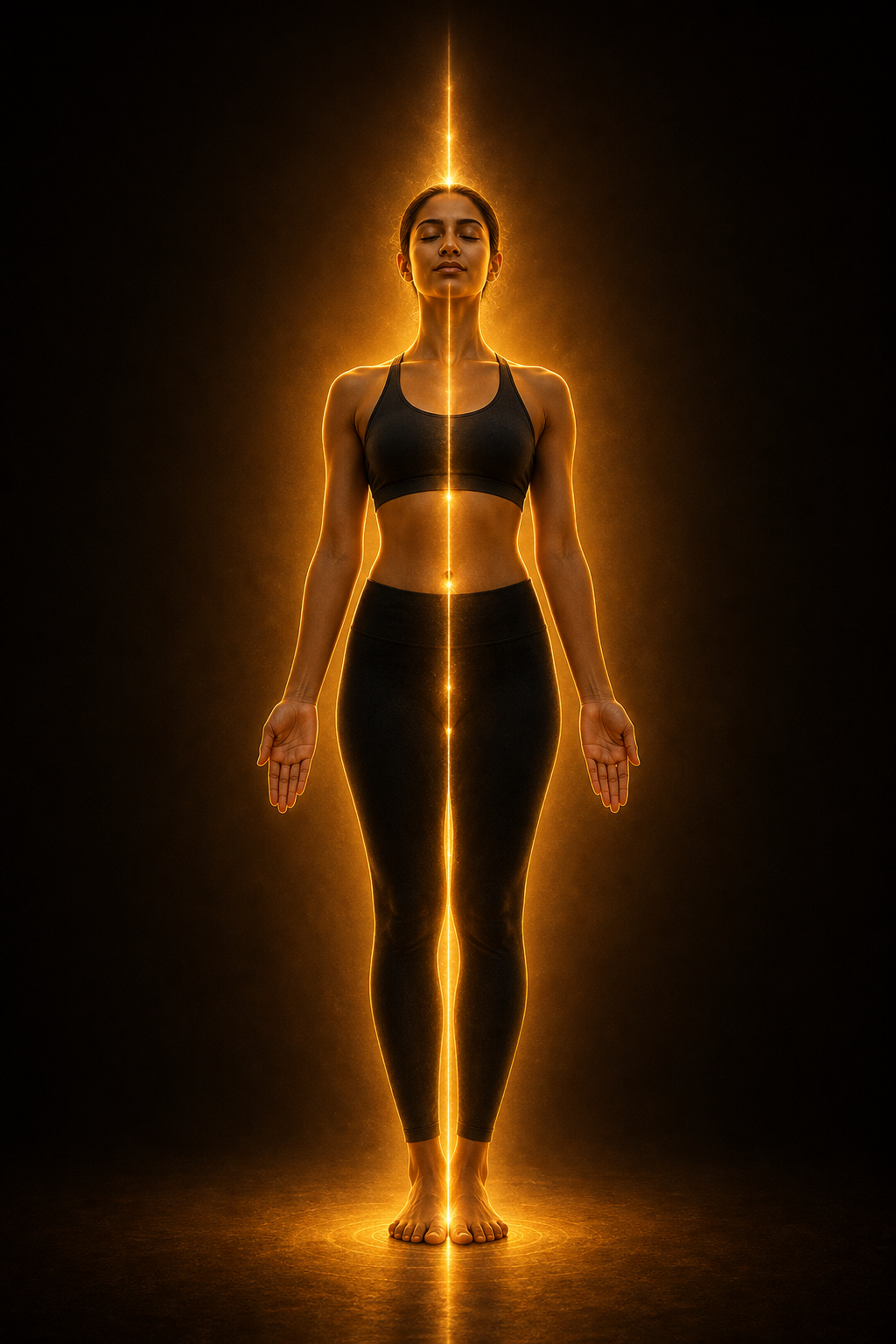
The foundation of all standing poses. Stand with feet hip-width apart, weight evenly distributed, spine erect, crown of the head lifting. Deceptively simple — Tadasana teaches you what it means to be fully present and grounded in your body.
Cultivates awareness of the present moment and grounds the practitioner in stillness — the foundation all other asanas grow from. Every complex pose is Tadasana expressed through a different shape.
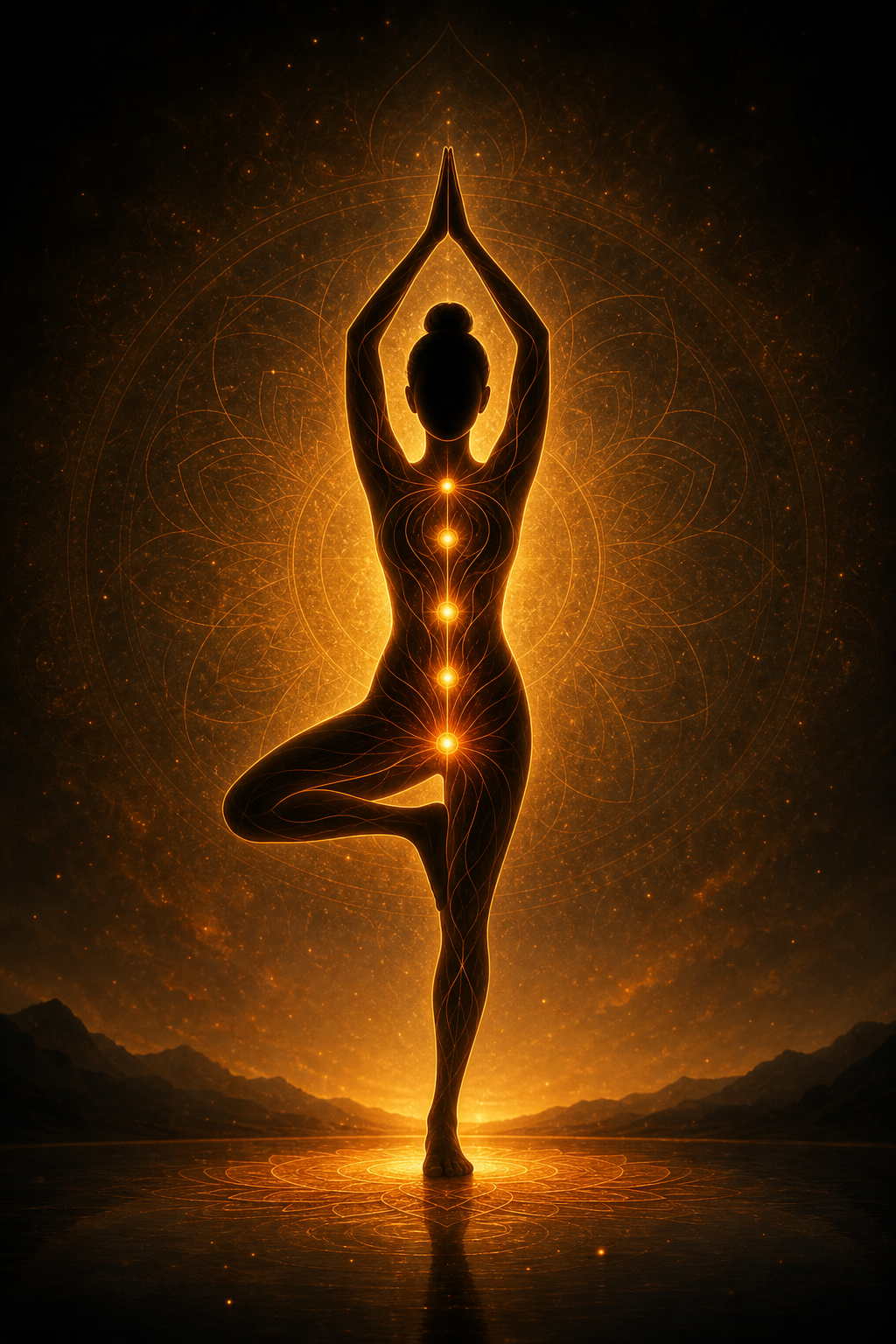
Stand on one leg, the other foot placed on the inner thigh or calf, hands in prayer at heart or raised overhead. Named for the rooted yet upward-reaching nature of a tree — grounded below, expansive above.
Trains the mind to return to center through each wobble — mirroring the meditative instruction to gently recall scattered attention back to the present. The tree does not fight the wind; it grows deeper roots.
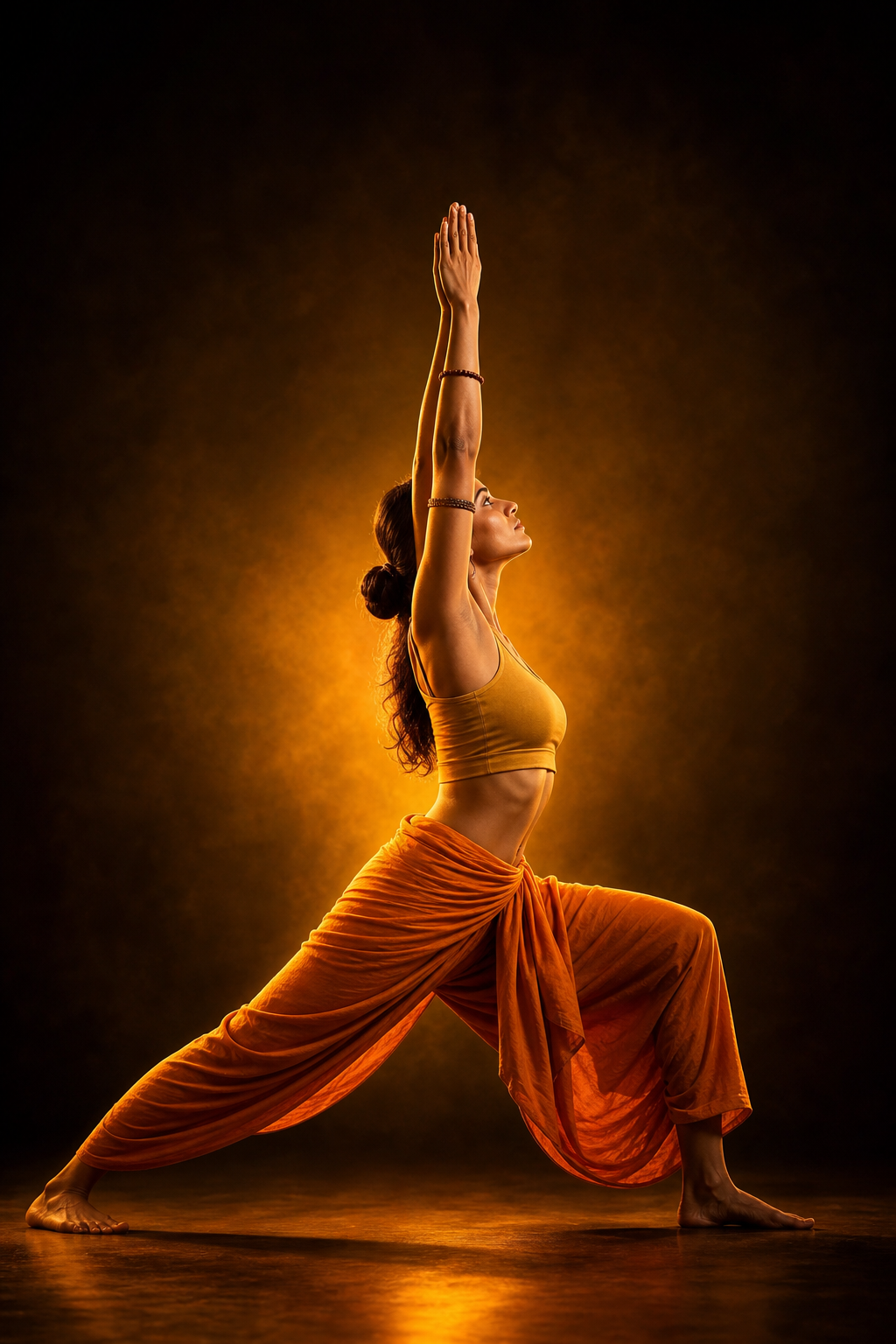
A powerful lunge with the back foot angled 45°, front knee bent, arms raised overhead, gaze skyward. Named for Virabhadra, the fierce warrior created by Shiva from his matted locks.
Embodies the inner warrior — the spiritual seeker who wars not with enemies but with ego, ignorance, and the obstacles to self-realization. The raised arms are a surrender upward: "I offer this effort to something greater."
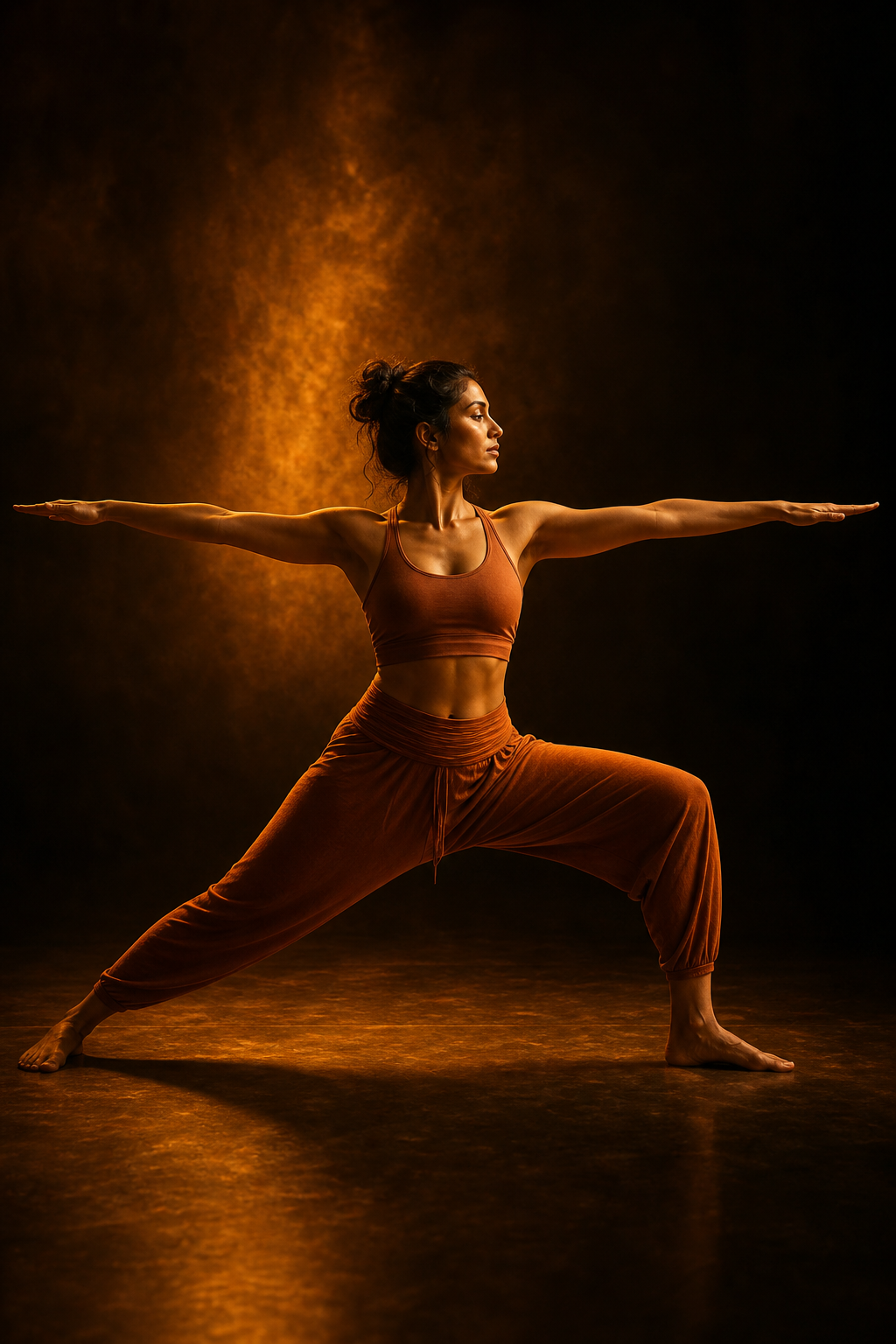
Standing with feet wide apart, front knee bent over ankle, arms extended parallel to the floor, gaze over the front hand. A pose of expanded awareness — the warrior surveys the entire battlefield with calm composure.
Cultivates equanimity — the ability to remain calm and fully present while engaged in the demands of life. The warrior sees all directions simultaneously and chooses action without agitation.
Balancing on one leg, the body forms a T-shape — torso and back leg parallel to the floor, arms reaching forward or back. The most demanding of the Warriors, requiring full integration of strength, balance, and concentration.
The warrior's arrow — one-pointed, unwavering flight toward the target. Represents the undivided mind that has overcome distraction and moves with total commitment in a single direction.
Wide stance, one arm reaching down toward the floor alongside the front leg, the other arm extending skyward. The body forms a triangle — a symbol of stability and harmony in Hindu geometry.
The triangle is a sacred yantra symbol — stability, the divine trinity (Brahma-Vishnu-Shiva), and the harmony of opposites. This pose teaches the body to embody sacred geometry: the union of earth below and sky above through the open channel of the spine.
From a wide lunge, the torso extends laterally with one arm reaching overhead, creating a long diagonal line from back foot to fingertips. A full-body stretch that combines strength and flexibility.
Opens the lateral nadis (energy channels) of the body — the ida and pingala — that run alongside the spine. By creating space in the side body, prana flows more freely through these channels, preparing for pranayama and deeper practice.
Feet together, knees bent as if sitting in an invisible chair, arms raised overhead. Builds the inner fire (tapas) through sustained effort — physically demanding but deeply empowering.
A pose of tapas — the sacred austerity that burns away impurity. By deliberately choosing discomfort and observing it without reaction, the practitioner trains the will that is essential for all advanced spiritual practice. Discomfort becomes the teacher.
Named for Garuda, the divine eagle — vehicle of Vishnu. Standing on one leg, the other leg wraps around it, arms entwined at chest height. A complex, concentrating pose that untangles the joints and sharpens focus.
Garuda is Vishnu's vehicle — the supreme devotee who carries the Divine. The pose invokes the eagle's quality of undistracted, soaring focus: the ability to rise above the small concerns of ordinary mind and perceive reality with piercing clarity.
Seated poses open the hips, lengthen the hamstrings, and cultivate the inward turning of awareness. Many are directly used in pranayama and meditation practice.
The most accessible cross-legged seat. Shins crossed, each foot below the opposite knee, spine erect, hands resting on the knees. "Sukha" means ease, comfort, happiness. This is where practice begins for most people.
The foundation of all inner work. "Sukha" means happiness — this pose teaches that the gateway to meditation begins with finding ease within the body itself. No tension, no striving: just the simple dignity of sitting upright in the present moment.
Each foot rests on the opposite thigh, soles facing upward. The lotus — rising from muddy water to bloom in pure beauty — is the supreme symbol of enlightenment. The body's most stable and symbolic meditation seat.
The supreme meditation posture — designed to lock the body in stable stillness so the mind can turn entirely inward toward samadhi. The lotus rises untouched from the mud: this pose embodies the soul's nature — immersed in the world yet forever unstained by it.
One foot rests on the opposite thigh in lotus position; the other foot remains beneath the opposite knee. A transitional pose between Sukhasana and full Padmasana, requiring significant hip openness.
The practitioner learns half the lesson of full Lotus — that surrender to the pose cannot be forced. Patience, consistent preparation, and trust in the process are the only true teachers on the path to stillness.
Kneeling with the buttocks resting on the heels, spine erect. "Vajra" means both thunderbolt and diamond — the pose of indestructible clarity. Unique among yoga poses: it can be practiced immediately after eating.
The "thunderbolt" is Indra's weapon that destroys illusion. This grounding pose directs the apana (downward energy) to establish Mula Bandha and centers the practitioner — creating the indestructible diamond-clarity of a mind settled fully in the present.
Seated with the soles of the feet together, knees falling outward like butterfly wings. Gently grasping the feet, the torso can fold forward. One of the most effective hip openers available.
Opens the inner hips — where fear, emotional holding, and unconscious tension are stored in the body. Gradually releasing what stands between the practitioner and the stable meditation seat of Padmasana: not just tight muscles, but the deeper patterns they represent.
Seated with legs extended, folding forward over the legs. "Paschima" means west — the back of the body, traditionally associated with the unconscious. This pose stretches the entire back side of the body and turns attention inward.
"Paschima" is the west — the back of the body and the realm of the unconscious. Folding over the legs is a gesture of humble surrender to what lies behind and beneath: the offering of the spine to the earth and the turning of awareness away from the outer world entirely.
One leg extended, one knee bent with the foot against the inner thigh. Folding forward over the extended leg with a slight twist through the spine. Asymmetrical seated forward bends address imbalances between the two sides of the body.
The asymmetrical posture reveals what the symmetrical mind prefers to ignore — the hidden imbalances between left and right, effort and ease, shadow and light. By working each side separately, the yogi learns to bring equity and balance to the divided mind.
Seated with knees stacked, one arm reaching over the shoulder, the other behind the back — clasping hands between the shoulder blades. The stacked knees and arm position resemble a cow's face. An intense hip and shoulder opener.
The extreme simultaneous opening of hips and shoulders — the joints where the body stores its deepest holding — prepares the practitioner to sit in true stillness. What cannot be released through ordinary stretching is addressed here: the body's armoring against vulnerability.
Backbends open the front body, stimulate the spine, and cultivate the courage to be open and receptive. They're energizing and heart-opening — working against the habitual forward curl of modern life.
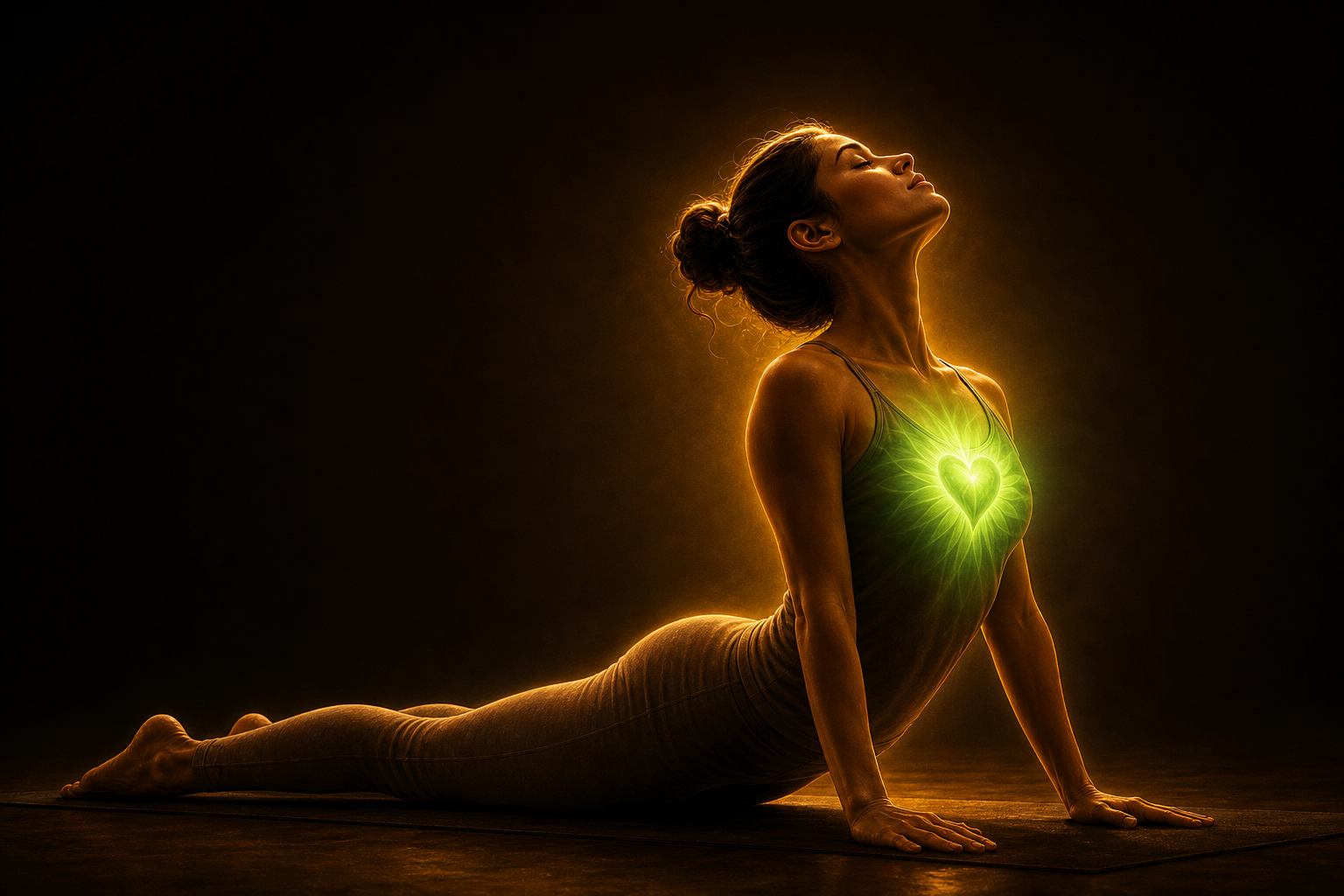
Lying prone, hands under the shoulders, pressing the chest up while keeping the pelvis grounded. Named for the sacred cobra — associated with Kundalini energy rising up the spine. A gentle but potent spinal awakener.
Opens the heart center (Anahata chakra) and stimulates the upward flow of kundalini energy through the spine — the sacred cobra rising from the earth toward the light. Shiva wears a cobra around his neck: this pose honors that primal upward aspiration of consciousness.
From prone, pressing fully into the hands, lifting both the chest and thighs completely off the floor. Only hands and feet touch the ground. More intense than Cobra, requiring full arm extension and strong back engagement.
The upward-looking face is a gesture of aspiration — the willingness to receive grace from above. This pose opens the heart and throat simultaneously, inviting prana to flow upward through the central channel as the entire front body opens like a door.
Lying on the back, feet flat on the floor, lifting the hips toward the ceiling. Arms can remain flat or interlace beneath the body. A gentle but effective backbend that bridges the floor and the sky — earth and higher consciousness.
The bridge spans the gap between the earthly and the divine. Grounded through the feet while the heart lifts toward the sky — this pose teaches the integration of embodied earth-energy with the opening of the higher chakras, the meeting point of matter and spirit.
Kneeling with the hips over the knees, reaching back to grasp the heels while the chest lifts skyward and the head falls back. A powerful heart-opener that requires significant spinal flexibility and courage to open fully.
Demands the courage to expose the unguarded front of the body and throat — the seat of vulnerability. A pose that confronts the fundamental fear of being open and teaches the transformative power of radical receptivity: the strength found in softness.
Lying prone, bending both knees, reaching back to clasp the ankles, then kicking the legs away to arch the body into a bow shape. A full-body backbend that combines the energy of Cobra and Locust.
The bow must be bent under tension before it can propel the arrow toward its target. This pose embodies tapas — the purifying fire of sustained effort — storing energy in the body like a drawn bow, preparing the practitioner for the single-pointed release of higher practice.
Lying on the back, arching the chest off the floor, resting on the crown of the head. Matsya (fish) is the first avatar of Vishnu — the primordial rescuer. Traditionally the counter-pose to Shoulderstand (Sarvangasana).
Called the "destroyer of all diseases" in Hatha texts. As the counter-pose to Sarvangasana, it opens the Vishuddha (throat) chakra — the seat of authentic expression and truth — balancing the deep inward contraction of the shoulderstand with an expansive outward offering of the voice and heart.
Forward bends are cooling, inward-turning, and humbling. They stimulate the nervous system's parasympathetic branch — the rest-and-digest response — and cultivate the quality of surrender.
Standing with feet hip-width apart, folding completely forward from the hips, letting the torso hang heavy. A release of all effort — the body surrenders to gravity. One of the most calming poses available.
The gesture of complete submission — the head bows below the heart, the ego surrenders its upright stance. Humility made physical. In this pose, the analytical mind that usually governs from on high descends below the heart and rests — a teaching in the priority of feeling over thinking.
Standing with feet 3-5 feet apart, folding forward to place the hands or crown of the head on the floor between the feet. An accessible semi-inversion that stretches the inner legs and spine simultaneously.
A semi-inversion that brings the analytical mind (the head) lower than the heart without the full challenge of true inversions. This gentle reversal of hierarchy gently shifts the practitioner's habitual orientation — preparing the way for the deeper inversions of Sirsasana and Sarvangasana.
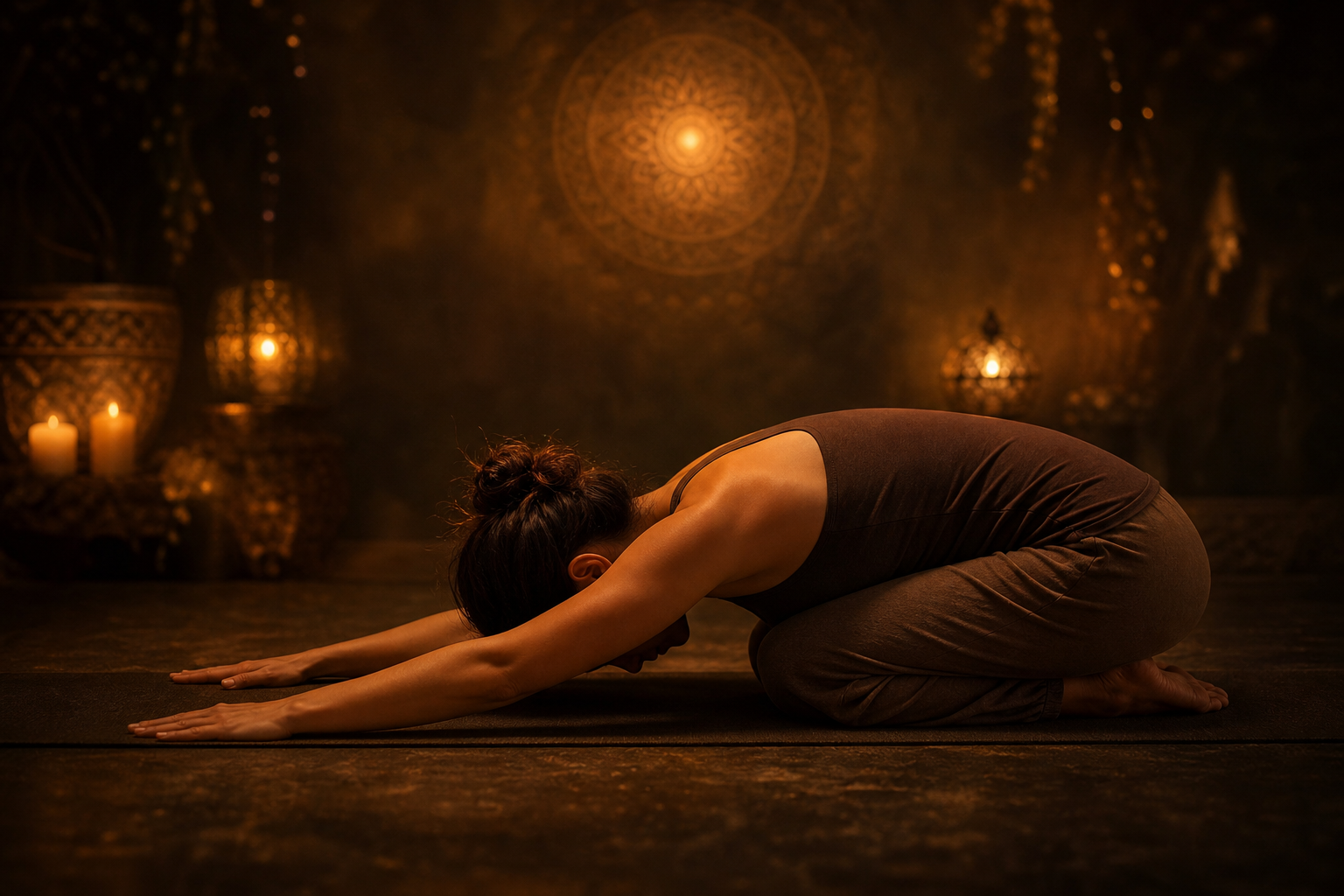
Kneeling with the torso folded forward, arms extended or resting alongside the body, forehead on the floor. The gesture of a child sleeping — completely surrendered, safe, at rest. The universal resting pose in yoga.
The gesture of the child before the Divine — complete surrender, ego dissolved into the earth. This is the pose of safe return: whenever practice becomes overwhelming, Child's Pose is the gentle reminder that surrender is always available, and that resting in the care of something greater is not weakness — it is wisdom.
Twists wring out the spine like a wet cloth — compressing and then releasing the abdominal organs, improving spinal mobility, and cultivating the ability to see multiple perspectives simultaneously.
Seated with one leg extended, the other foot outside the extended knee, torso twisting toward the bent knee. Named for Matsyendranath — the legendary yogi who heard Shiva's teachings while in the form of a fish. A deep spinal twist.
Named for the fish-yogi who overheard Shiva's secret teachings on liberation. The twist wrings out physical and psychic toxins accumulated through identification with the ordinary world — compression followed by release, creating space for a new current of understanding to flow in.
The mirror-world version of Triangle Pose — the torso rotates completely, reaching the opposite hand to the floor. One of the most challenging standing poses: simultaneously a forward bend, twist, balance, and hamstring stretch.
The reversal of the ordinary triangle — the twist demands a complete shift in perspective, literally and figuratively. Develops the capacity to hold two opposing forces simultaneously without collapse: strength and surrender, effort and ease, the seen and the unseen.
A gentle seated twist named for the sage Bharadvaja, one of the seven great rishis of Vedic tradition. Sitting with both legs to one side, twisting toward the front leg. A therapeutic twist accessible to most practitioners.
Named for the Vedic sage Bharadvaja — a rishi of dharma, wisdom, and patient inquiry. This gentle twist embodies his quality: quiet, deliberate, methodical turning toward truth without force. The spine is the axis of awareness; to rotate it is to look at reality from a new angle.
Inversions reverse the effect of gravity, sending fresh blood to the brain and glands. In the tradition, they are said to conserve the vital "amrita" (nectar) that flows downward and is usually lost — reversing aging.
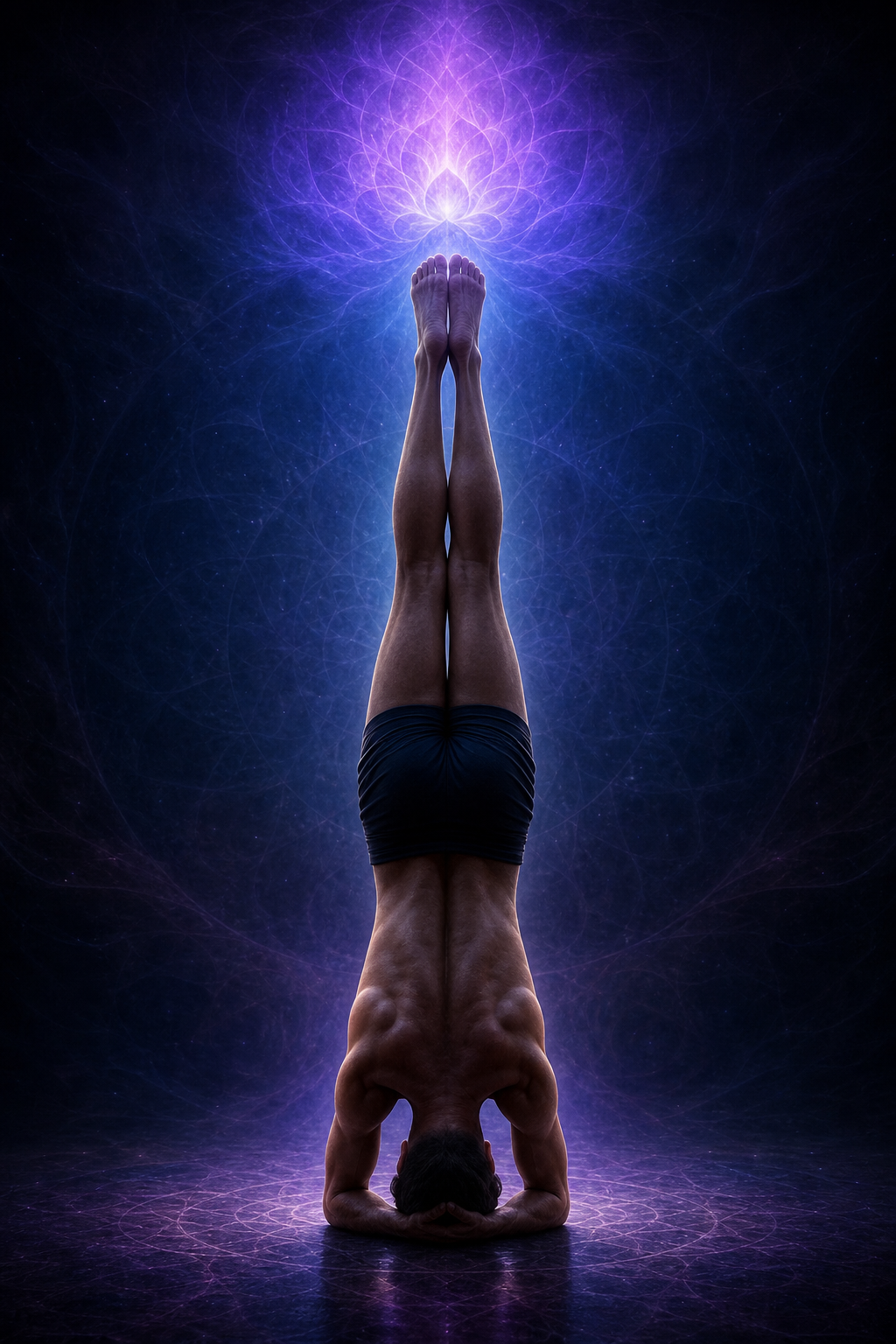
"King of Asanas." Balancing on the forearms and crown of the head, body fully inverted. One of the most transformative poses in yoga — requiring strength, balance, and the courage to completely reverse one's relationship to gravity.
Called "King of Asanas" — the complete reversal of ordinary orientation that symbolizes the yogi's transformation: turning the mundane world upside down to perceive the spiritual reality beneath appearances. Stimulates the Sahasrara (crown) chakra and the seat of the master gland — the pituitary — gateway to superconscious states.
"Queen of Asanas" — a full inversion supported on the shoulders, with the body perpendicular to the floor. The chin lock (Jalandhara bandha) stimulates the thyroid. Always follow with Matsyasana (Fish Pose) as a counter-pose.
Called "the mother of all asanas" in Hatha yoga — stimulates the throat chakra (Vishuddha) and promotes pratyahara (sensory withdrawal), nurturing and regulating all systems of the body like a mother nurtures her children. The Jalandhara bandha (chin lock) seals the amrita from flowing downward and is lost.
From Shoulderstand, legs lower over the head until toes touch the floor behind. A deep spinal flexion inversion. The plow turns the earth for new growth — this pose turns the practitioner's perspective completely inward.
The plow breaks open the hard earth to prepare it for new seed. This pose breaks open the habitual forward-facing orientation of consciousness — the deep spinal flexion creates profound pratyahara (sensory withdrawal), drawing the entire nervous system away from the external world and inward toward the Source.
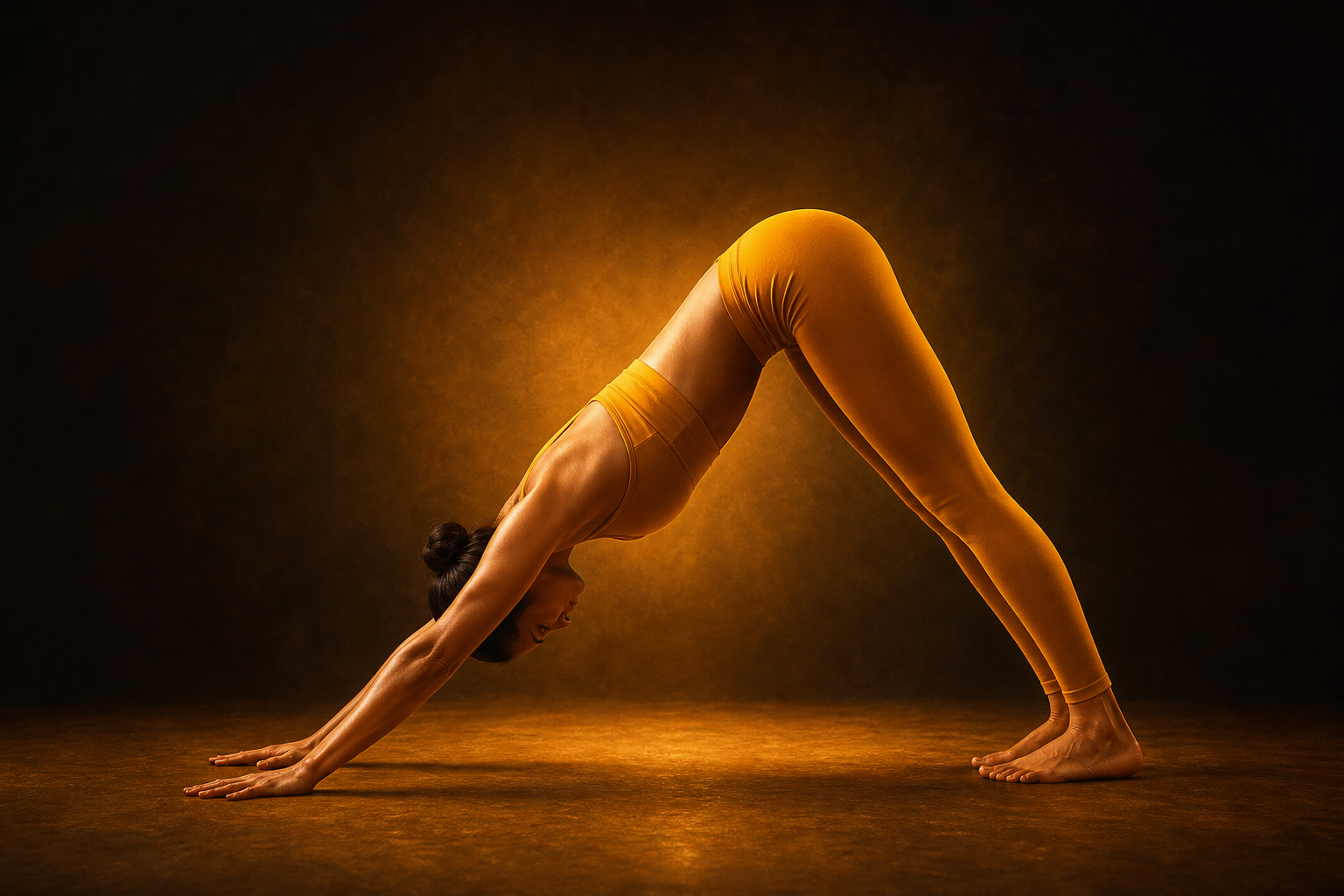
The most universally practiced yoga pose — an inverted V-shape with hands and feet on the floor, hips high. A mild inversion, a full-body stretch, and a resting pose all in one. The foundation of most yoga sequences.
The dog bows its head below its heart in greeting — this pose is simultaneously salutation, rest, and renewal. Its ubiquity in Vinyasa practice is deliberate: it is the neutral home base from which all active poses radiate and to which the practitioner always returns, like breath returning to silence.
Lying on the back, legs extended up a wall at 90°. The most accessible inversion — deeply restorative, suitable for almost everyone. "Viparita" means inverted; "Karani" means action. A gentle reversal of the ordinary downward flow.
Literally "inverted action" — the reversal of the ordinary energy flow of life. In the tradition, the vital amrita (nectar of immortality) flows constantly downward from the moon center in the palate and is consumed by the digestive fire below. This pose gently reverses that flow, preserving life force and promoting deep renewal.
Balance poses develop the single-pointed concentration (dharana) that is the sixth limb of Patanjali's path — a direct gateway to meditation. The wavering of the body mirrors the wavering of the mind.
Balancing the knees on the backs of the upper arms, both feet off the floor. The ultimate arm balance — requiring core strength, wrist strength, and most importantly: the willingness to shift your center of gravity forward past the point of fear.
The moment the feet leave the earth, the ordinary rules of survival are suspended. Crow pose teaches the terrifying and liberating lesson that the ego's greatest fear — falling — is survivable, even laughable. To tip forward into the unknown is the exact gesture required on every stage of the spiritual path.
Named for Nataraja — Shiva as the Cosmic Dancer. Standing on one leg, reaching back to grasp the foot, kicking the leg skyward while the torso folds forward. A breathtaking simultaneous balance, backbend, and forward bend.
Nataraja is Shiva's cosmic dance of simultaneous creation and destruction — in one gesture, the universe is made and unmade. This pose embodies that truth: beauty, balance, and the eternal now are inseparable. To hold it is to briefly inhabit the paradox at the heart of existence.
Balancing on one leg with the torso horizontal, the lifted leg parallel to the floor, one hand on the ground (or a block), the other arm reaching skyward. The body forms a crescent — half of a full circle, gesturing toward wholeness.
The crescent moon is the emblem of Shiva — incomplete, becoming, always in transition between darkness and fullness. This pose teaches the practitioner to find stability in the impermanent: to balance gracefully within the eternal becoming, rather than demanding the solid ground of a completion that never arrives.
Restorative poses are not passive — they are active rest, the practice of conscious release. Without the ability to deeply relax, no amount of energetic practice can reach its full depth.
Lying completely still on the back, eyes closed, body utterly released. The final pose of every yoga practice — and paradoxically the most difficult to truly master. The body dies; the awareness remains. A rehearsal for the final surrender.
The rehearsal for the final surrender of life itself. "Shava" means corpse — the identity completely released, awareness remaining without doing. The closest the living body comes to samadhi: consciousness without the activity of the ego. Yogananda taught that this state is the natural gateway to meditation.
Lying on the back with the soles of the feet together, knees falling out to each side. Completely passive — the earth supports all the weight. One of the most deeply restorative hip openers in yoga, perfect for the end of practice.
The passive opening of the hips while completely supported by the earth — a teaching that the deepest release does not come through effort but through complete and trusting surrender to gravity, to the ground beneath, to the Divine support that is always already there.
These are Patanjali's original asanas — the stable, comfortable seats for pranayama and meditation. For Kriya Yoga, the quality of the seated posture is not optional. An erect spine is the physical prerequisite for the energy movement of Kriya.
Yogananda was explicit: during Kriya practice, the spine must be erect and perfectly still. The Kriya breath circulates prana through the chakras in the spinal column — a bent, collapsed, or uncomfortable spine creates energetic blocks that prevent this movement.
The great masters could sit for hours without the slightest movement. This isn't spiritual achievement — it's the result of systematic physical preparation through asana practice. → Learn Kriya Yoga
"Siddha" means perfected being or adept. One heel pressed against the perineum (at the base of the spine), the other foot placed in front of it, both knees resting on the floor. Considered by many masters as the most powerful meditation seat for men.
The pose of the siddha — the perfected one who has mastered both the body and the mind. The heel's pressure at the perineum naturally activates Mula Bandha, directing the normally outward-flowing apana energy upward through the sushumna nadi toward liberation. Many masters considered this the most direct seat for Kundalini awakening.
See Seated Poses section above for full description. In the meditation context: Padmasana creates the most perfect symmetry and stability, locking both heels against the abdomen, which naturally activates the energy centers and supports advanced pranayama.
In the meditation context, Padmasana is the throne of the Self. Both heels press against the lower abdomen, activating the energy centers simultaneously — the body becomes a sealed vessel in which prana cannot escape downward, creating the perfect conditions for Kundalini to rise through all seven chakras toward samadhi.
See Seated Poses section above for full description. In the meditation context: Sukhasana is the entry point. If Siddhasana and Padmasana are not yet accessible, Sukhasana with a blanket for pelvic tilt is a completely valid Kriya seat.
In the meditation context, Sukhasana is the reminder that the path begins exactly where you are — not where you think you should be. The spine's erectness and the mind's willingness are infinitely more important than the specific arrangement of the legs. Yogananda approved this seat unreservedly for sincere practitioners.
Every asana described here is training for the great work: sitting in stillness with the spine erect, turning the attention inward, and practicing the pranayama techniques that carry the yogi toward Self-realization. Yogananda placed Kriya Yoga at the summit of this path.
No notes yet.
Jot down thoughts as you explore.