Quantum Computing
Building machines that harness reality's weirdest rules — and in doing so, revealing fundamental truths about the nature of information, computation, and the universe itself.
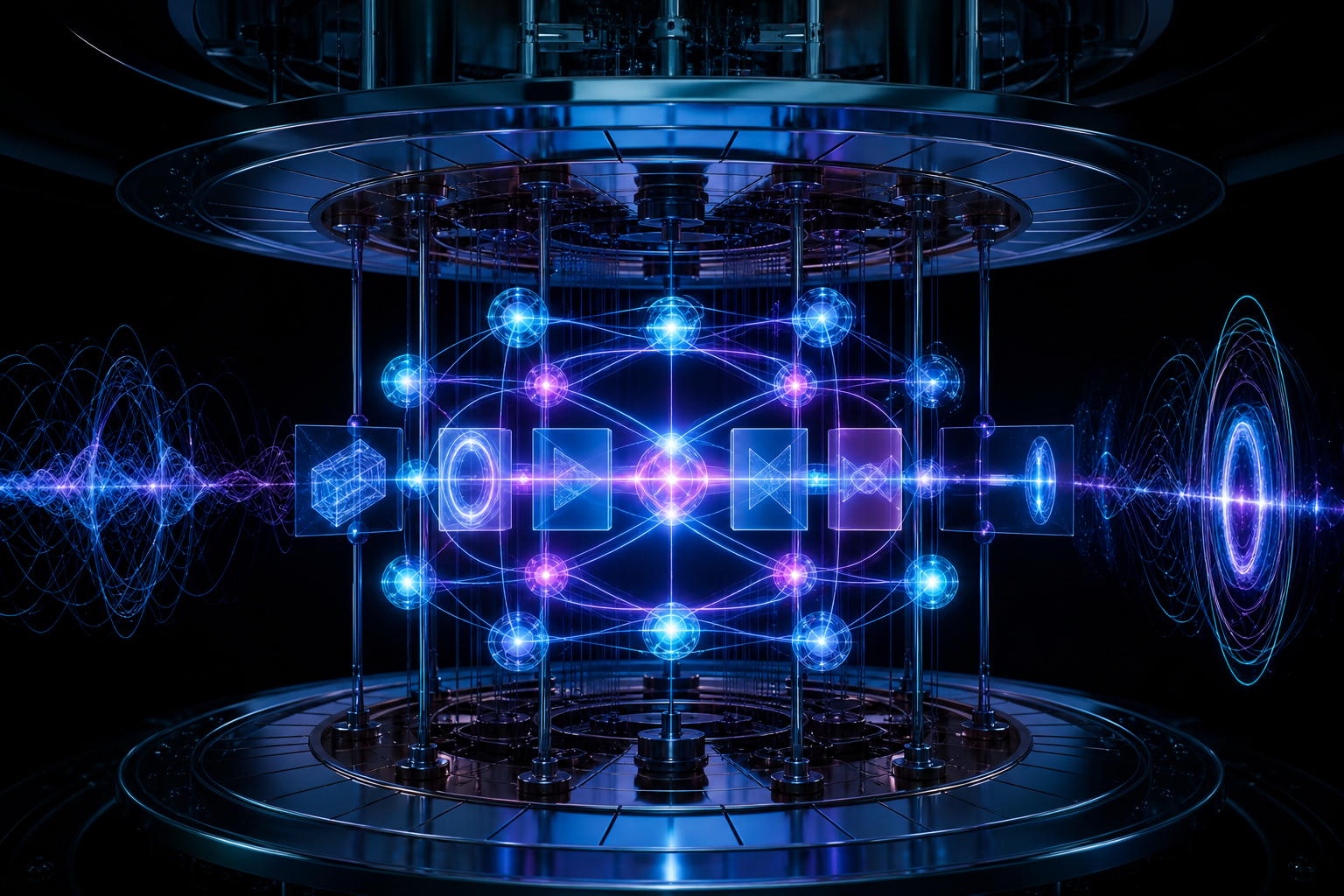
n qubits can represent 2ⁿ states simultaneously — a 300-qubit system
can represent more states than there are atoms in the observable universe.
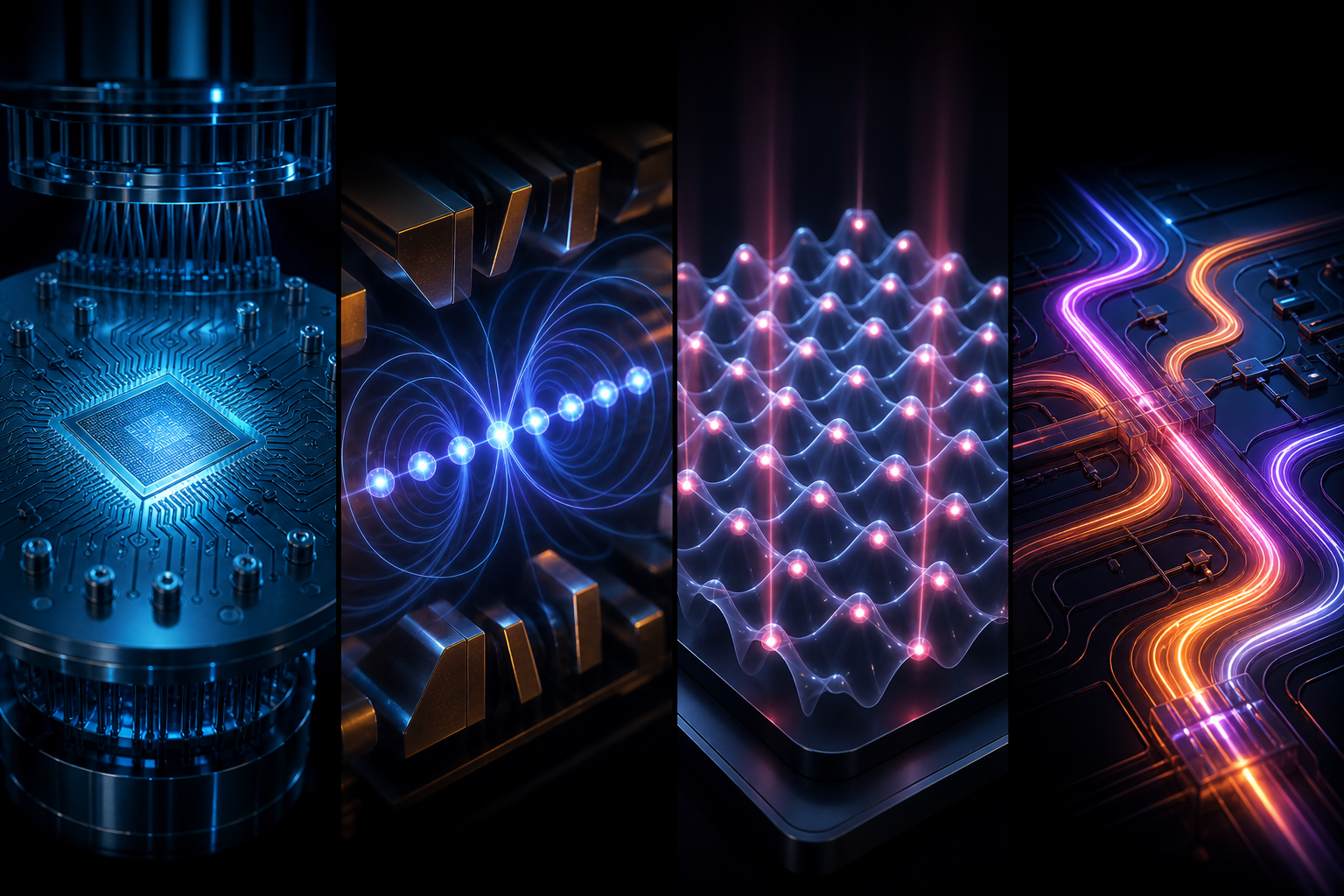
Quantum computers are not simply faster classical computers. They are fundamentally different computing architectures that excel on specific problem classes — particularly those involving superposition, interference, and entanglement. For most everyday computing tasks, a classical computer is still faster and cheaper. The power emerges for specific hard problems: factoring, quantum simulation, optimization.
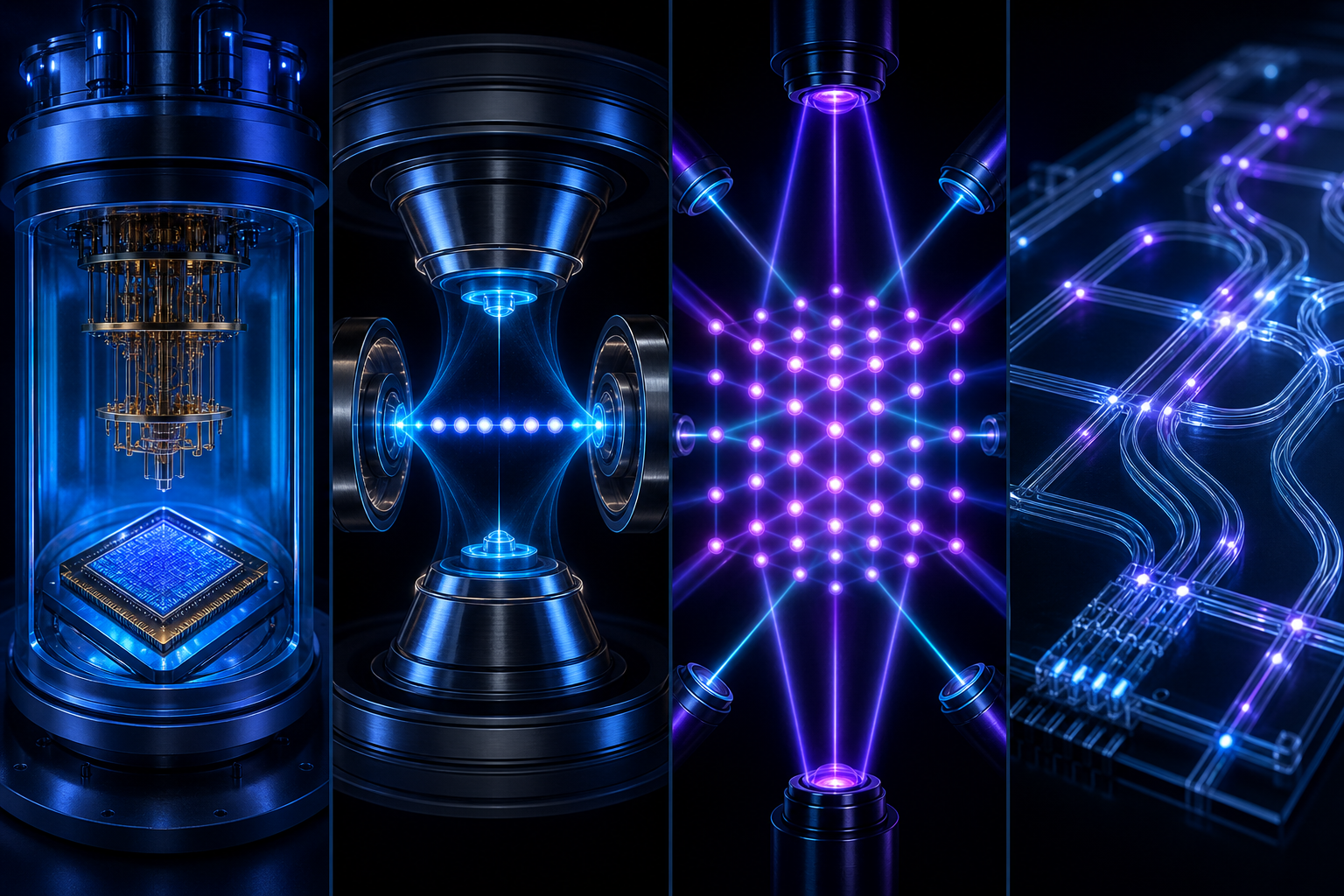
What Can Quantum Computers Actually Do?
Current devices are in the NISQ era (Noisy Intermediate-Scale Quantum) — too noisy for full fault-tolerant operation, but powerful enough for early demonstrations. The path to industrially relevant advantage requires fault tolerance — likely late 2020s.

Not Just Engineering — An Experiment on Reality
Building quantum computers is not merely an engineering project. It is an experiment on the nature of reality itself.
Information is Physical
Landauer's principle shows computation has thermodynamic costs. Quantum information theory shows the universe processes information according to quantum rules. The universe is not just described by information — it appears to be information. John Wheeler's "It from Bit" gains new force every time a quantum computation succeeds.
The Limits of Classicality
If quantum computers can solve problems that classical computers cannot simulate in reasonable time — and they demonstrably can, for certain problem classes — then the classical world we experience is a tiny slice of a vastly larger quantum state space. Most of reality's computational richness is invisible to classical eyes.
Observation and Collapse, Operationalized
Every quantum computation ends in measurement — wave function collapse. Building machines that harness superposition forces engineers and physicists to operationalize exactly what "measurement" means. The most practical problem in quantum engineering — how to read out a qubit's state — is identical to the deepest conceptual problem in quantum foundations.
The Ultimate Irony
To understand whether the universe is a simulation, a quantum computer, or something deeper, we are building quantum computers. The tool and the question converge.