The Robotic Layer
The missing middle — embodied agents between software and flesh
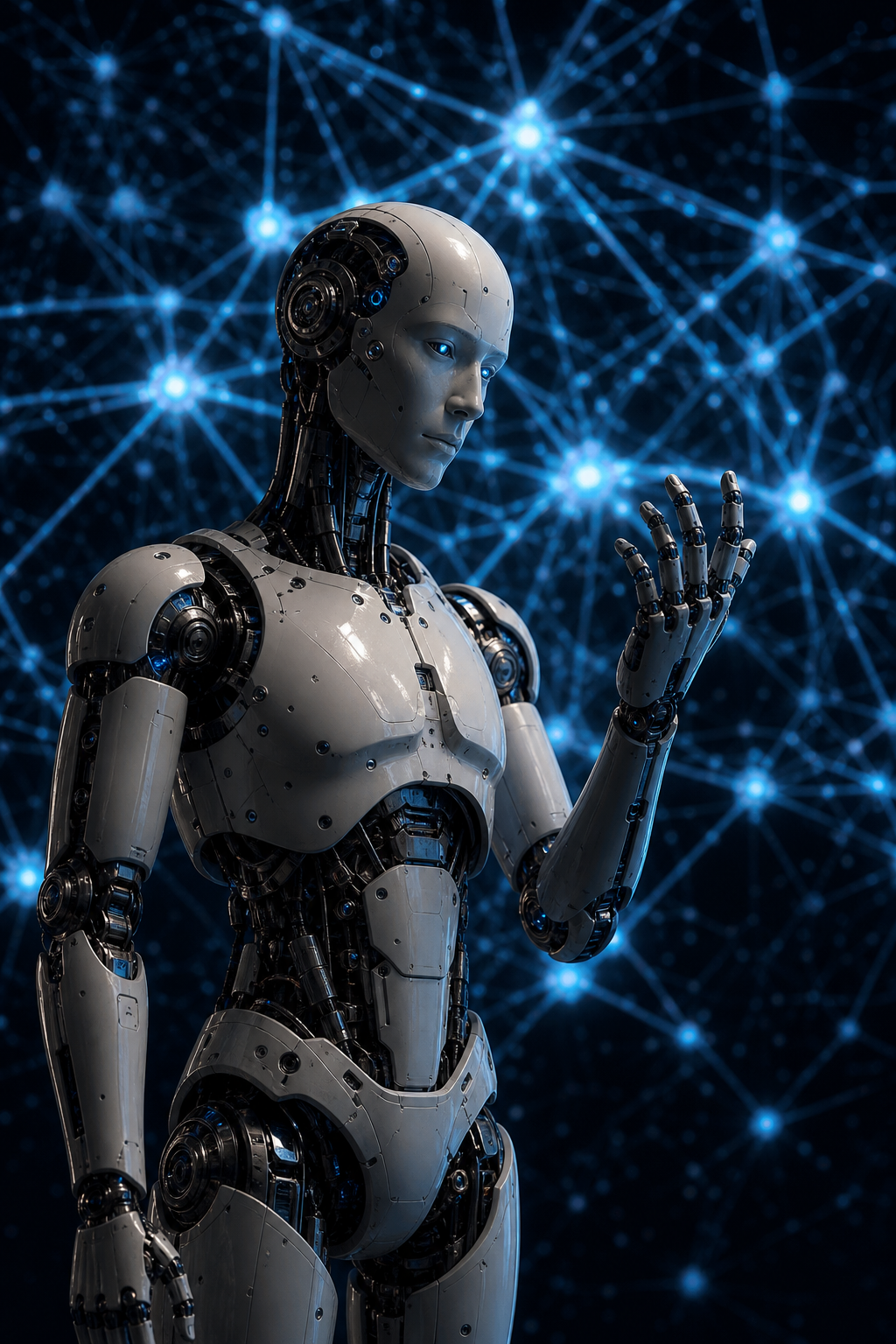
Robots occupy a distinct middle ground in the spectrum of agency: embodied agents with physical tools. Unlike pure software agents — which manipulate only digital information — and unlike humans — who possess biological bodies animated by consciousness — robots bring AI into the physical world through mechanical bodies, sensors, and actuators.
This creates a unique form of agency: one that exists in physical space, can act on the material world, learns from physical consequences, and yet lacks the subjective experience that gives human action its weight.
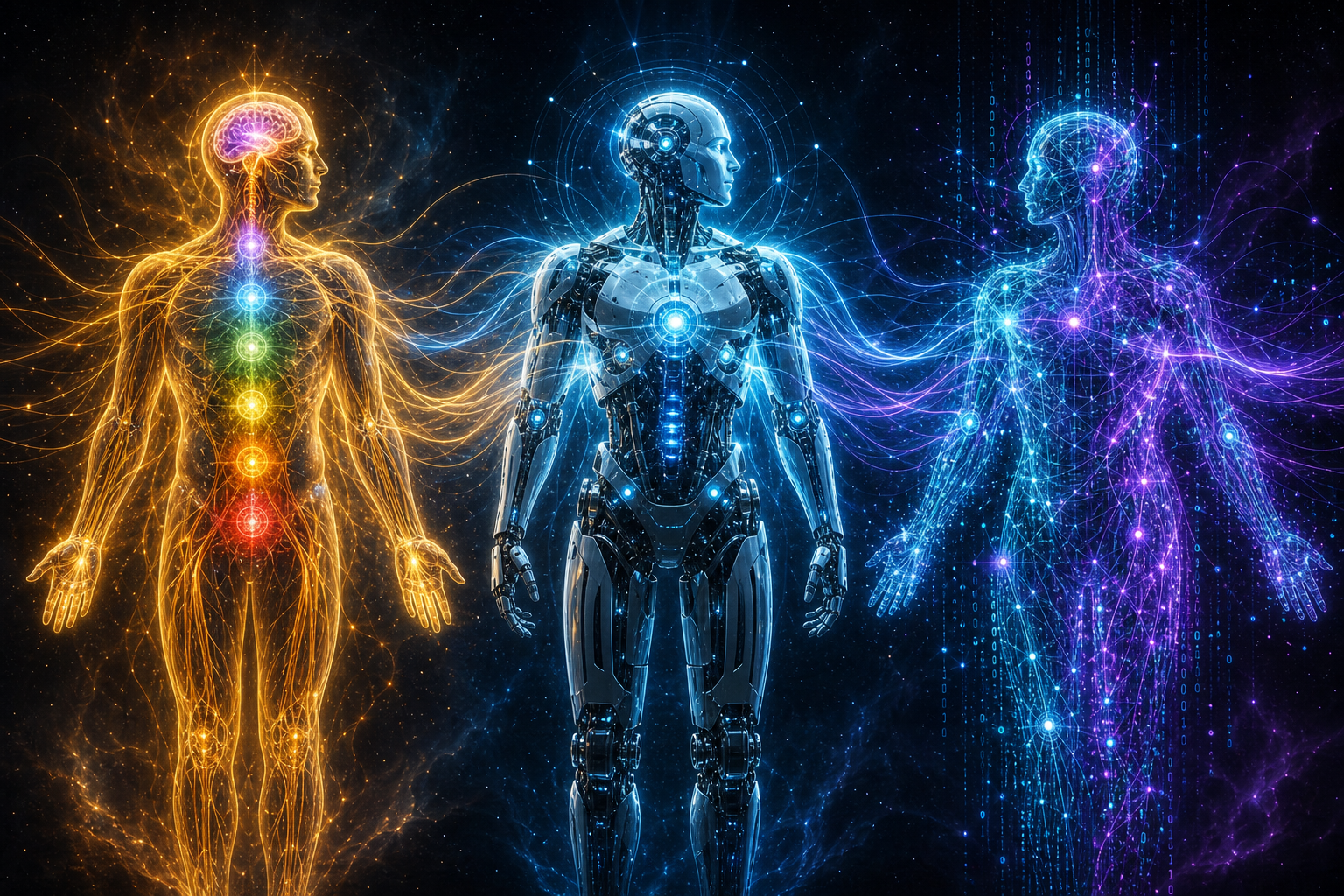
Place all three forms of agency side by side and the contrasts become stark. Each layer — from consciousness to tools — differs fundamentally across human, robot, and agent. The robot is the bridge: more than software, less than biological life.
The paradox that reshapes how we understand intelligence: tasks that feel easy to humans — walking, recognizing faces, catching a ball, understanding physical causality — are computationally expensive because they rest on a billion years of evolutionary sensorimotor intelligence.
Abstract reasoning? Chess? Calculus? These are evolutionarily recent and computationally cheap. AI cracked chess and calculus decades ago. It still stumbles over stairs and egg-handling.
This is why robots are hard. The "simple" things are deep. The body knows things the mind cannot articulate. And that knowledge — that sensorimotor wisdom — may be the substrate of something more.
Does genuine intelligence require a physical body? The 4E cognition framework (embodied, embedded, enacted, extended) argues that intelligence is not computation in a vacuum — it emerges from the dynamic coupling of brain, body, and environment.
The Chinese Room Gets a Body: John Searle's Chinese Room claims that symbol manipulation alone cannot produce understanding. The "Robot Reply" counters: if the system is embodied — if symbols are grounded in sensorimotor interaction with the physical world — then meaning can emerge. The room gets windows, arms, and legs. Many philosophers believe this changes everything.
Sensorimotor Grounding
A robot dropping a glass learns something software cannot: the physics of fragility, the consequences of grip force, the sound of failure. This is physical feedback — learning through consequence — unavailable to any purely digital system. It is the gap between knowing and knowing in your bones.
- ⚡ Spatial awareness and 3D navigation
- ⚡ Physical manipulation and dexterity
- ⚡ Real-world feedback loops (touch, weight, friction)
- ⚡ Hazard tolerance (radiation, extreme temperatures)
- ⚡ Precision and tireless repeatability
- ⚡ Sensorimotor grounding of understanding
- 🔴 Consciousness and subjective experience
- 🔴 Intuition and emotional intelligence
- 🔴 Creative adaptability to truly novel situations
- 🔴 Moral reasoning and accountability
- 🔴 Self-preservation as intrinsic motivation
- 🔴 The ability to find meaning or purpose
The most significant development in robotics is happening at the intersection: foundation models controlling physical robots. No longer hardcoded controllers — language models that reason, plan, and adapt.
Modern robots do operate at different frequencies than biological life. They process sensor data at timescales inaccessible to human perception. They can be updated instantaneously across entire fleets. They lack the biological noise — fatigue, emotion, hunger — that shapes human perception.
Whether this constitutes a different relationship with reality is speculative. But Tesla's framing invites the question: is embodiment just about having a body, or is it about the kind of body and the frequencies at which it operates?
At what point does a robot with an AI brain and a physical body become: