BotBuhdy · How the movie magic works

The Train That Never Moves

In Reacher Season 5, a train car is going to race through the night. Here's the secret: it's parked, and it isn't going anywhere. We watched the setup in daylight. Tap the numbers to see how it works.

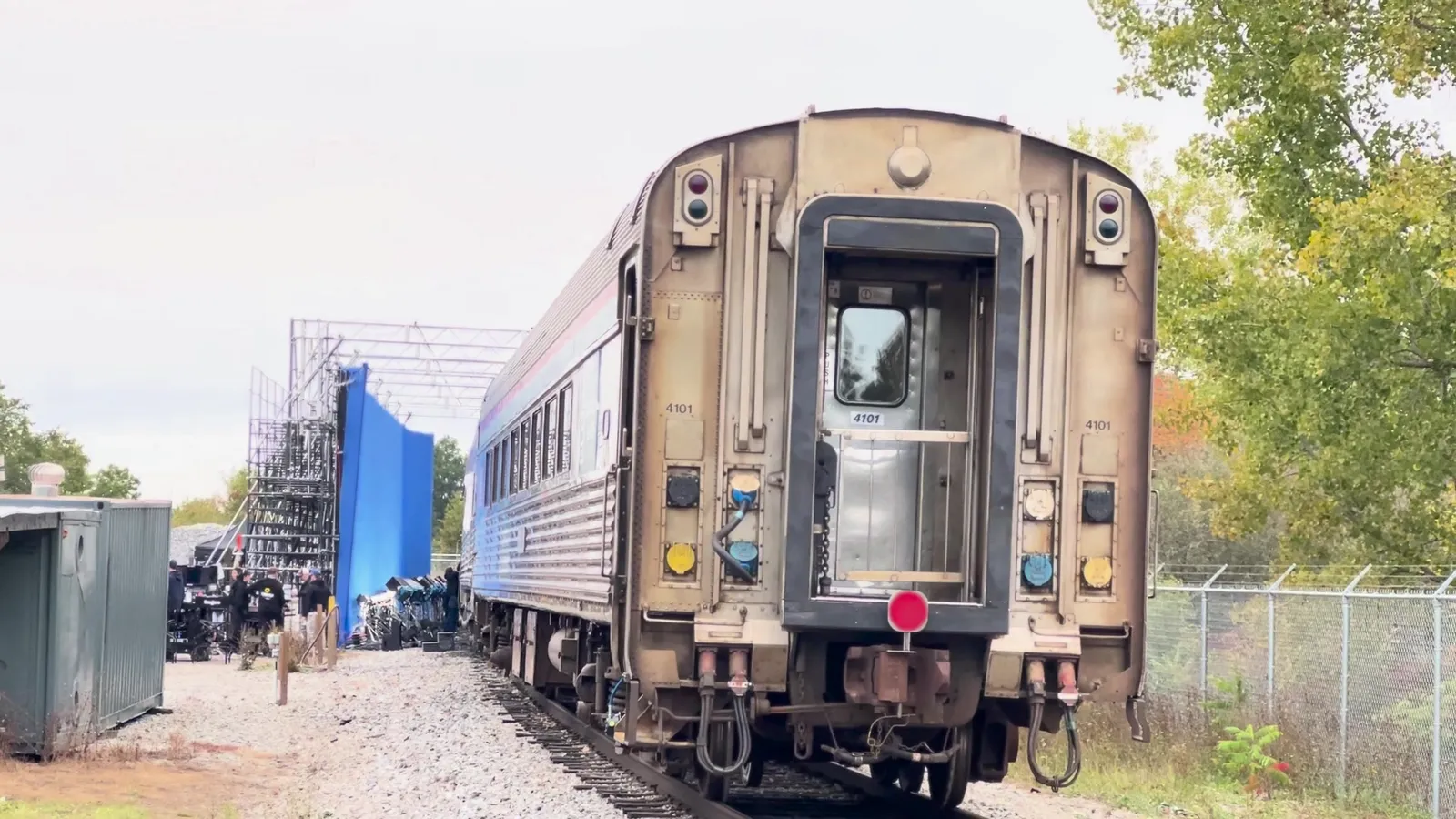
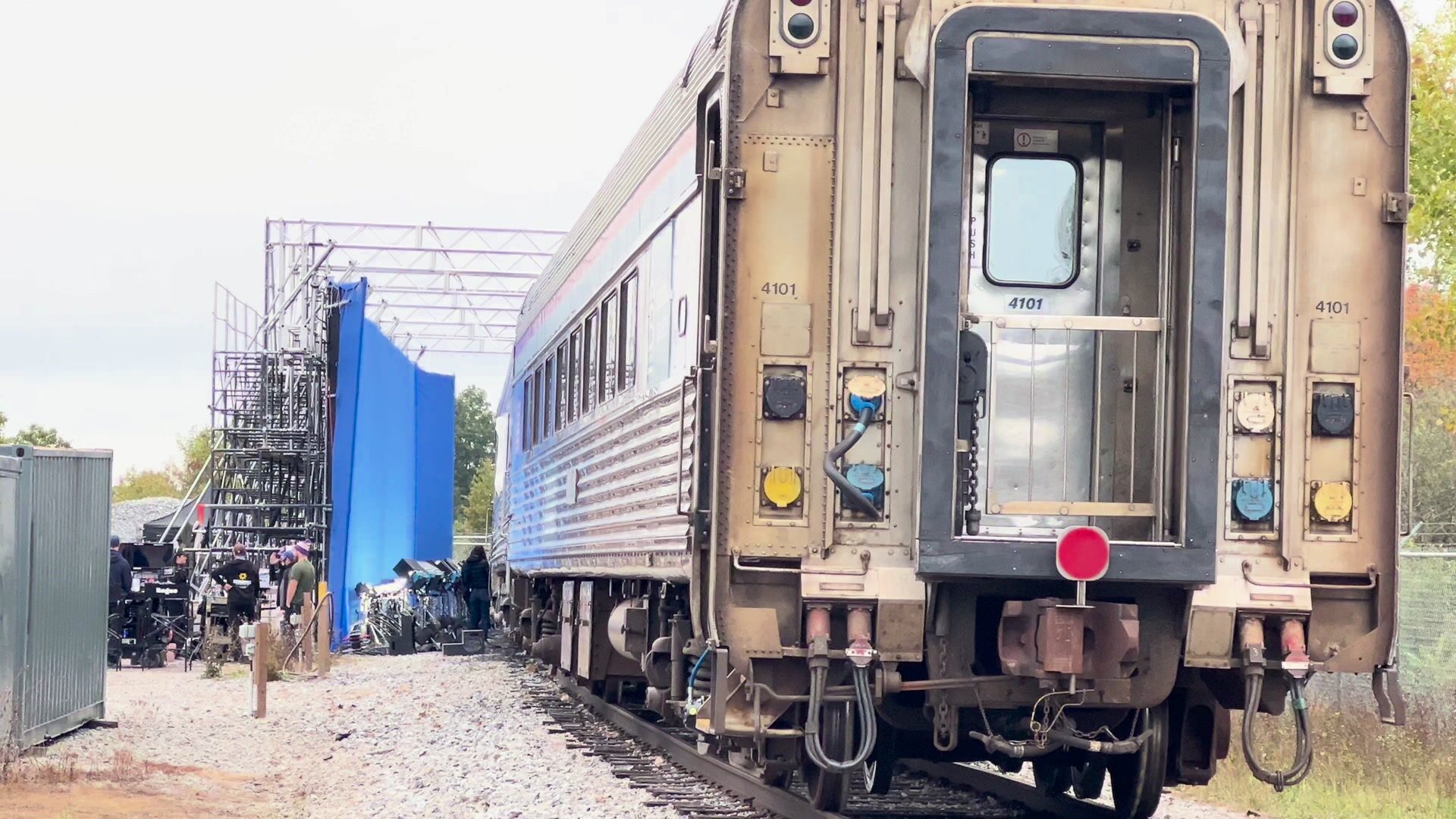
A stainless-steel passenger car on track. To its left, a tall scaffold tower holds a blue screen, with a truss grid overhead and a row of film lights on stands at the base.

What am I looking at?

Tap or click a numbered dot on the photo, or any item in the list below.

Photos: BotBuhdy, taken from public areas. Afternoon, before filming started.

A real car on real rails, with a set built around it

This is a real stainless-steel passenger car sitting on real track. Instead of hauling it through the dark behind a locomotive, the crew built the illusion around it: a tall scaffold tower with a big blue screen along one side, a truss grid over the top, and a cluster of lights aimed at the windows.

Why not just film on a moving train? A running train means track time, safety crews, noise, cramped camera angles and very little control over the light, and every retake means going around again. A parked car can be lit, reset and filmed as many times as the scene needs.

We photographed the setup in the afternoon, from public areas, before filming started. Below is what we saw, what a lighting crew member told us, and how this kind of shot generally works.

Seen in our photosTold to us by a crew memberGeneral technique how it's usually done
Seen The whole rig in one view. The car on the right, the blue screen and tower on the left, the lights at the foot of the screen.

How a parked car "travels" through the night

Three things do most of the work: something to replace the view out the windows, light that moves like the world is passing by, and a few finishing touches that sell the ride.

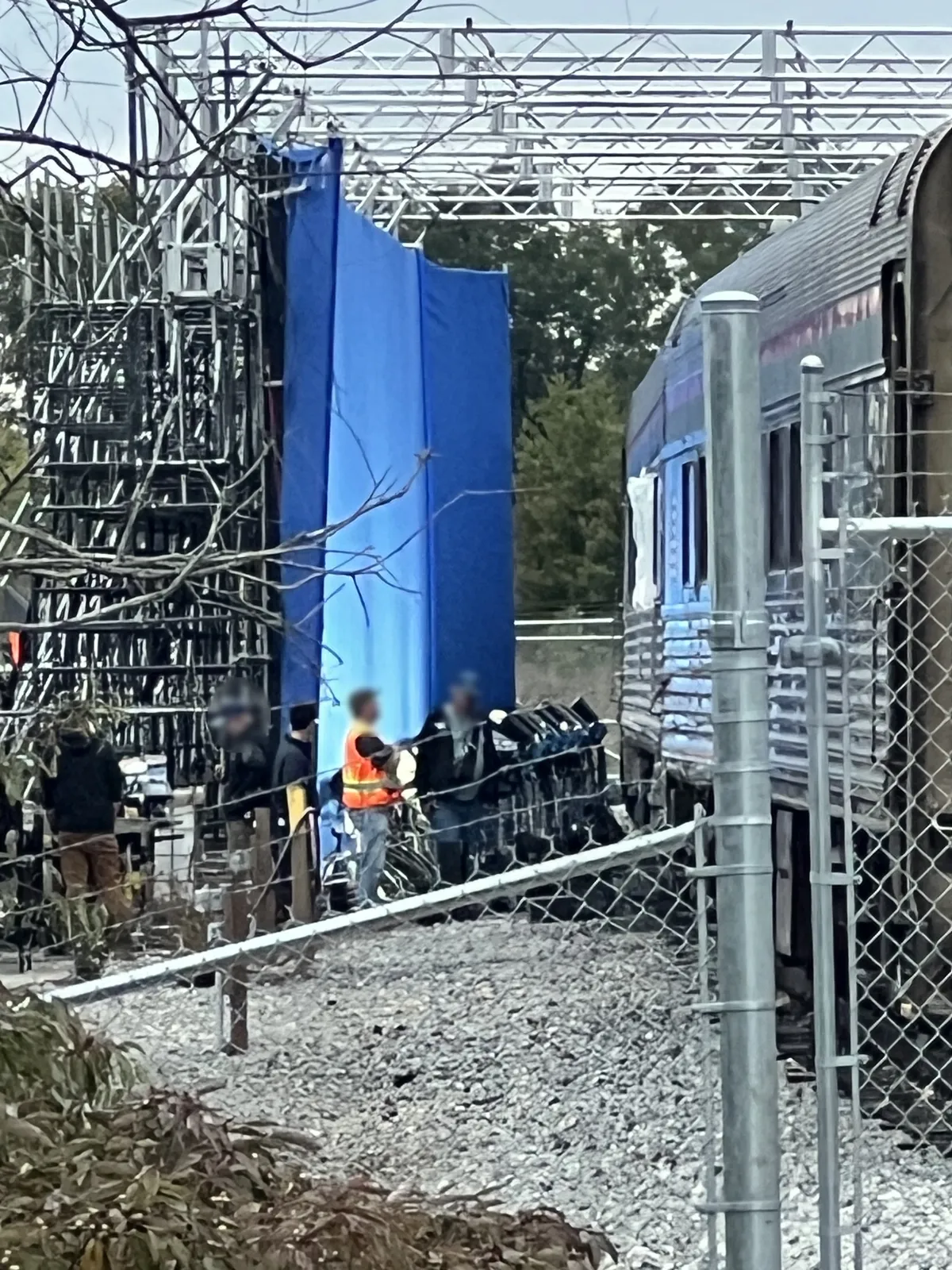
A tall blue screen hanging from scaffolding beside the train car, with a truss grid overhead
Trick 1 · The blue screen

Swap the view

Seen From inside the car, the camera looks out the windows at nothing but blue.

General technique Later, visual effects software picks out that exact colour and replaces it with whatever the scene needs: dark fields, a small town, a station platform. Blue is a favourite for night scenes because it's darker than green, so it bounces less coloured light onto actors and shiny surfaces. That's handy next to a polished steel car.

Crew faces blurred for privacy.
Trick 2 · The lights

Pass the world by

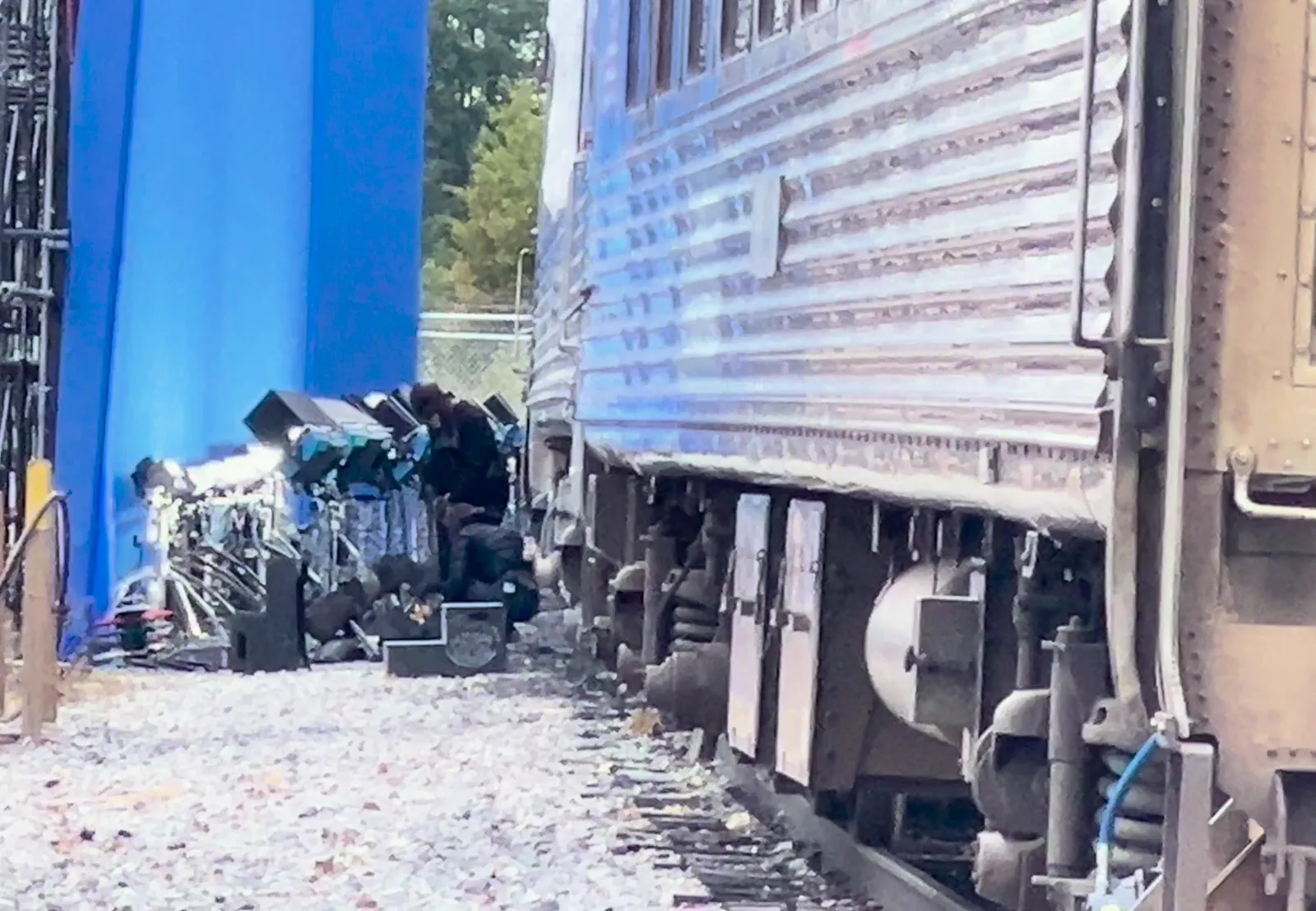
Told to us A lighting crew member told us the lights work like a kind of strobe, to make it seem like the train is moving.

General technique Lights outside the windows are programmed from a lighting console. They sweep down the length of the car like lamp posts and station lights flashing past, flicker for a tunnel or a row of trees, or pulse a colour for a signal. On an actor's face, that moving light is what tells your brain "we're travelling". Film crews call the low-tech version "poor man's process".

A row of film lights on stands between the blue screen and the side of the train car
Trick 3 · Finishing touches

Haze, a rock and a rumble

Told to us The crew member also mentioned they can add smoke or haze, and swap the blue screen for any scenery later.

General technique A thin haze makes light beams visible in the air and softens the picture, so each sweep of light reads as a real shaft of light. Add a gentle rock of the car, a little camera shake and the rumble of rails in the sound mix, and the illusion is complete.

Haze and rocking weren't happening while we watched.

The other side: what that screen could do

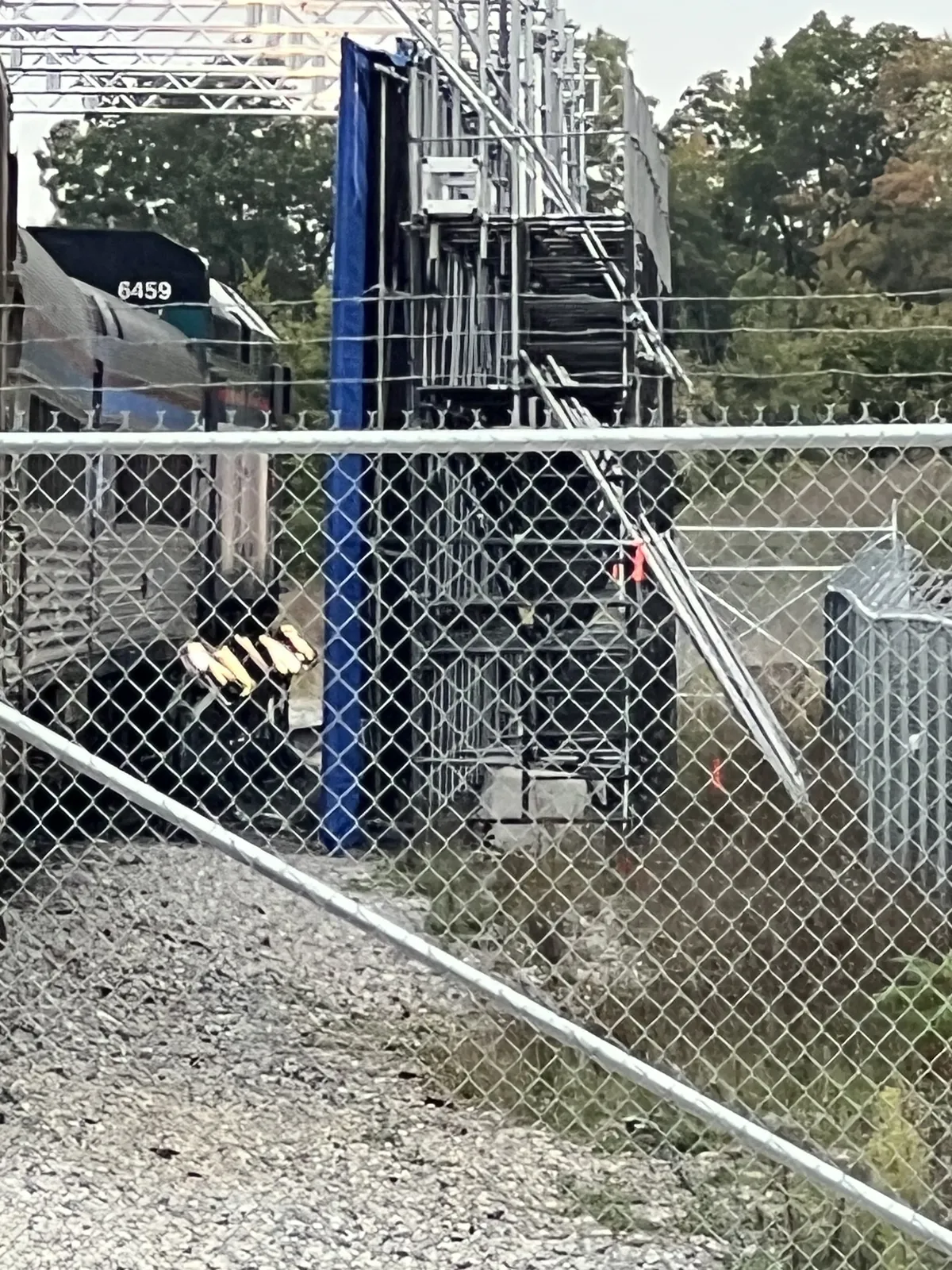
Seen through a fence: the back of the scaffold tower, with the blue screen hanging on the side facing the train and a truss grid overhead
Seen Round the other side. The back of the scaffold tower. The blue screen hangs on the side facing the train, with the truss grid overhead.

Our photos don't show exactly how every piece of this rig gets used once the cameras roll. So this part is about possibilities, not facts. Here's what a big screen or fabric frame like this can do on a film set:

  • A second chroma screen Possibility

    If the camera looks out windows on more than one side, each view needs something clean to key out. A coloured surface in the right place gives visual effects an area to replace.

  • Black fabric to kill reflections Possibility

    Stainless steel and glass reflect everything around them. Crews often hang matte black fabric (called duvetyne) as "negative fill" to soak up stray light, hide unwanted reflections and deepen the shadows for a night look.

  • A bounce or diffusion frame Possibility

    Large fabric frames can soften a light shining through them, or bounce light back as gentle fill on the actors' faces.

  • A surface for projected or interactive light Possibility

    Light can be bounced off or projected onto a big surface to make moving glows and patterns that play across the windows and the people inside.

These are general filmmaking techniques. We haven't confirmed how this production uses this screen.

What you see vs. what ends up on screen

What we saw on setWhat viewers usually see in a scene like this
A parked passenger car on trackA train speeding through the night
A big blue fabric wall outside the windowsScenery rushing past the windows, added by visual effects
A row of lights on stands, aimed at the carLamp posts, stations and signals flashing by, lighting the actors' faces
A bare truss grid over the carNothing. Rigging stays out of frame
Crew with carts and monitors next to a scaffold towerNothing. Just the story inside the car
A calm, overcast afternoonA dark, moody night, filmed after dark and colour-graded later
Complete stillnessMotion from moving light, a little camera shake, a gentle rock and the sound of the rails

The right-hand column describes how this kind of scene is usually done. We photographed the setup in daylight, not the filming itself.

Then the sun went down

We watched all of this come together through the afternoon. Just before dark, the crew politely cleared everyone who was watching, us included, probably so they could get Alan Ritchson settled into the car and start filming.

Wide view of the end of the passenger car on its track, with the blue screen and scaffold tower beside it
Seen Late afternoon. The last wide view before the area was cleared.

Later that night: still parked

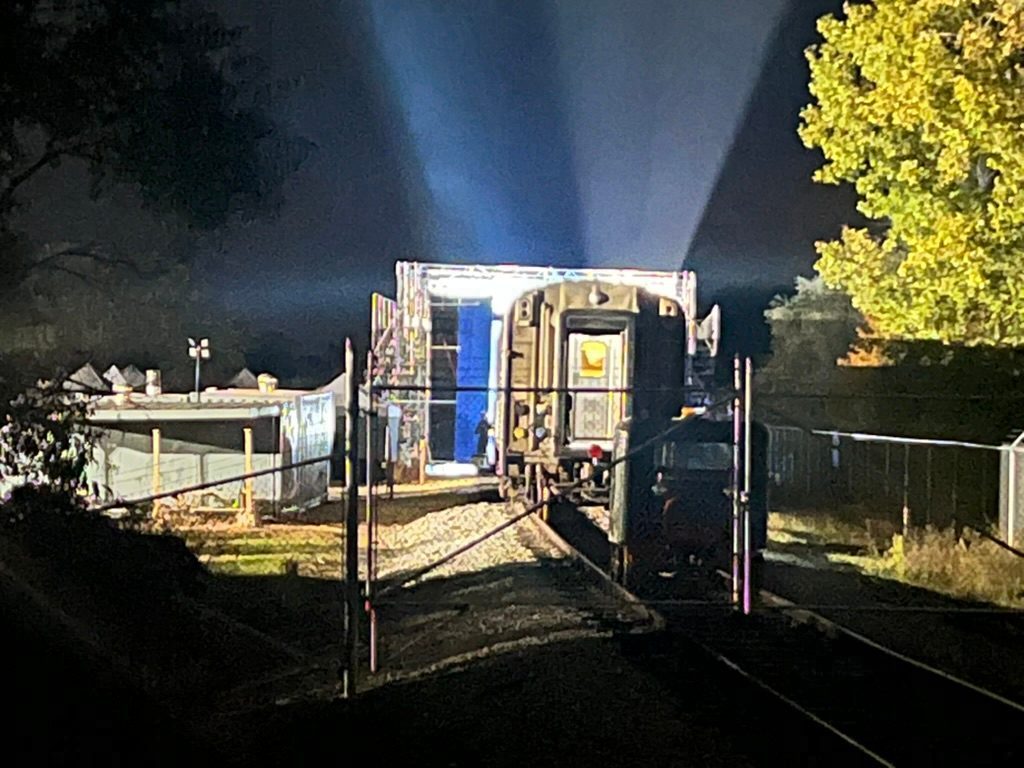
Later that night, the car was still parked in the same spot beside the tower, with the set lights blazing around it. It never has to go anywhere: Told to us a lighting crew member told us the lights work like a strobe to fake passing lights, and the blue screen gives visual effects a view to replace.

At night, the end of the parked passenger car on its track, with the lit scaffold tower and a strip of blue screen beside it and beams of light shining up into the dark sky
Seen After dark. Beams of light shine up into the night sky over the lit tower, with a strip of blue screen beside the car.
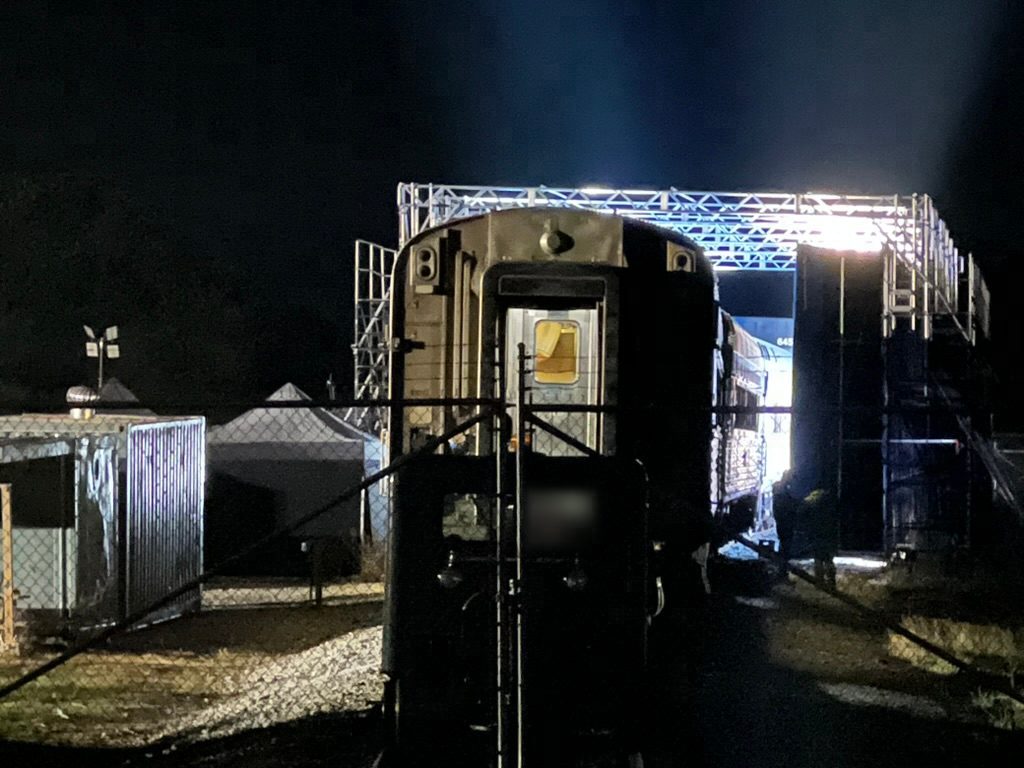
At night, seen through a fence: the end of the parked passenger car under the brightly lit truss grid, with light glowing along the screen side of the car
Seen Lights on, wheels still. The truss grid over the car is lit up, and bright light spills along the screen side of the car.

How the pros do it

Want to go deeper? These public articles explain the general techniques on this page. None of them are about this production.